
Date
Leaders might be loath to agree, but an alarming number of organisations have an identity problem. Lacking a sharp sense of who they are and what they stand for, they unwittingly borrow blended aesthetics. By mistaking familiarity for a similarity that makes them instantly forgettable, they dilute both employee and customer loyalty. At Aéto, we say it’s time to reject sameness and stand out by being unmistakably, unapologetically real – and we’ve found a group doing just that.
Tucked away in safe storage is one of the world’s most unique collections that records and celebrates individuality: it beautifully captures the qualities of a particular person or thing that distinguishes them from others of the same kind.
The collection is the UK’s Clown Egg Register, which offers each registered clown the opportunity to trademark their unique make-up design.
The registry began in 1946, when Stan Bult, a chemist and founder of Clowns International, took to drawing the faces of club members and famous clowns onto hens’ eggs. The collection was to help prevent the possibility of accidental or intentional plagiarism: there is an unwritten code among clowns that outlaws them from copying another’s face paint design, with the eggs providing a suitably head-shaped figurine. Real hens’ eggs were originally used, but after a series of unfortunate breakages, they were replaced with ceramic eggs.
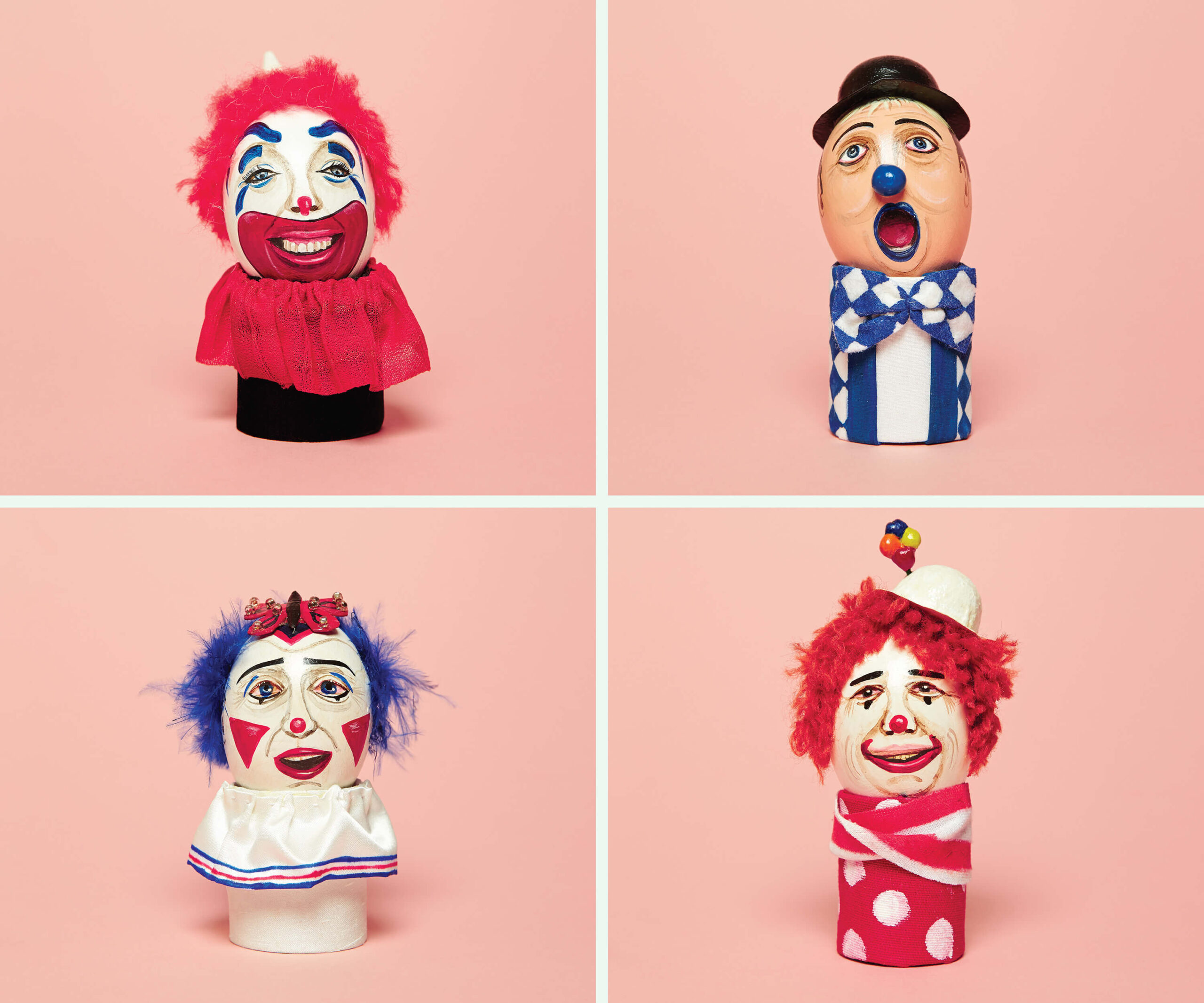
Any clown can apply to have their make-up design entered in the register for a small fee and by sending reference photographs to the Clowns International Egg Register, where the sitting resident egg artist will paint the clown’s likeness onto two ceramic eggs. One is kept in the collection, and one is sent back to the clown as a sort of certificate of their face paint design’s authenticity – what makes them who they are visually as a performer.
The present Clowns International resident egg artist Julie Proctor is branching out. Her new “Drag Queen Egg Register” is a growing art project, inspired by the Clown Egg Register, where artists paint the unique make-up of drag performers onto eggs to document and celebrate their transformations, recording their distinct looks as a form of queer cultural history and artistic expression. It’s a way for drag artists to have their iconic looks immortalised, much like clowns have done for decades, creating a visual archive of their artistry and their originality.
Aéto spends much time working with client real estate and leadership teams to help them discover what it is that makes them who they are as an organisation, and how that can best be expressed through their spaces in a way that feels authentically “them”. In a world of what Aéto has termed “Instafication”, workplace design too often starts with what photographs well rather than what works well for the people who use it.
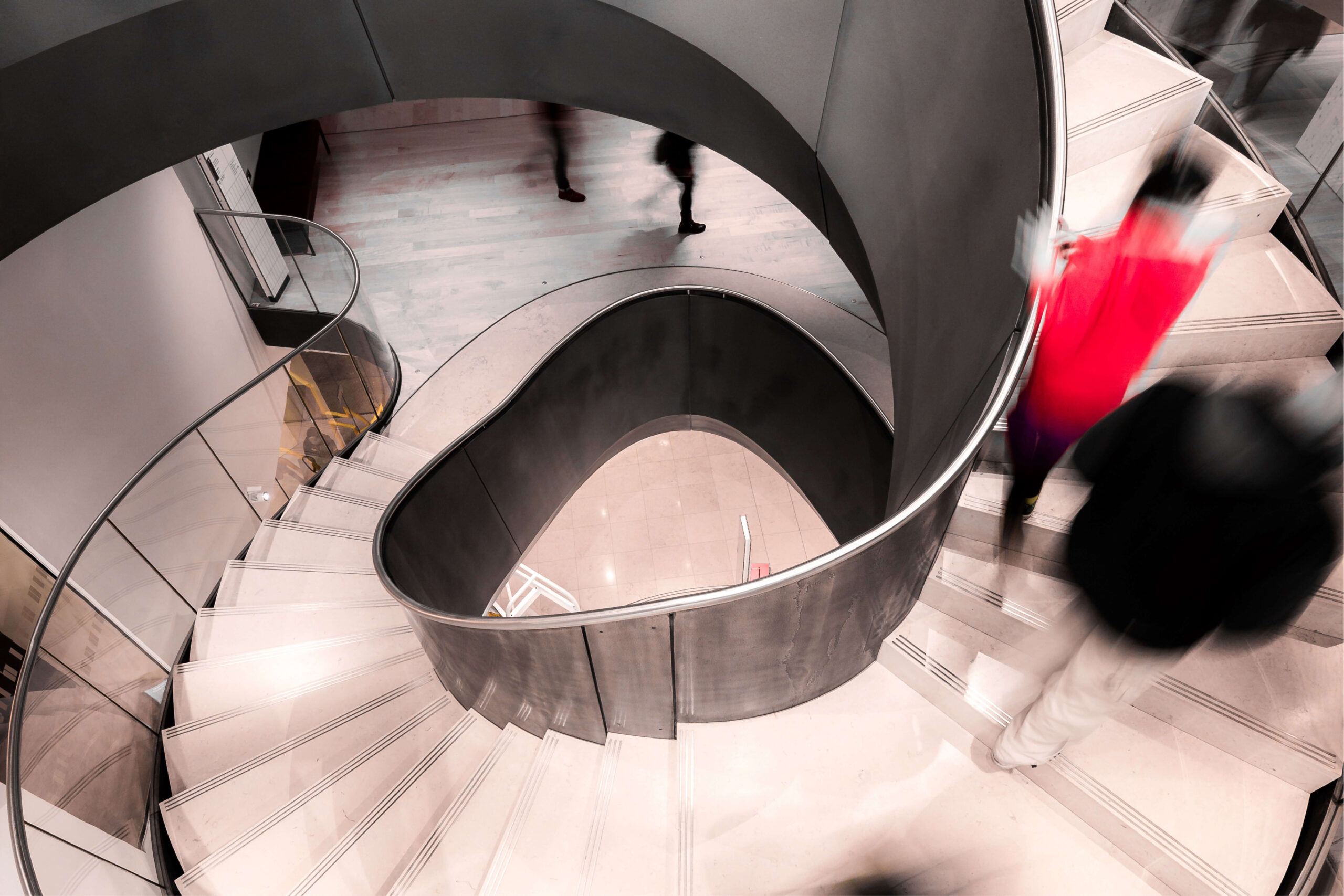
We see that certain features have become default signalling devices. Feature staircases and bleacher seating are so prolifically presented as case study highlights as to risk becoming a homogenised visual metaphor for everything that is wrong with the design industry.
Feature staircases are a mechanism for getting you from one place to the next, but they can be disproportionately expensive given the operational value they can offer. Over time, they have started to read less as thoughtful design choices and more as a monochrome visual for the industry itself.
In an age when it is so easy to share and to source visual imagery, creating architectural and interior spaces that are visually different to the next is arguably getting harder. But this is exactly why corporate organisations need to have a crystal-clear sense of what makes them different from their peers – because this is also part of helping their clients and their employees make better and clearer choices about whether to trust, respect, and engage with them or not. It’s this plurality that creates the lasting value of an organisation and its spaces.
Perhaps every organisation needs its own version of the Clown Egg Register, i.e. a clear, committed record of exactly who they are, what they believe, and what sets them apart from their peers. At Aéto, we help organisations find and hold onto those answers so they can manifest them in their workplaces, because in a world of sameness, that distinctiveness is everything.
Read our article Deshitification to understand how workplace shrinkflation and instafication is killing design one feature at a time.