
Date
But as these brands work to win our loyalty, they must juggle the economics of delivering corporate profit and shareholder returns. One of the most pervasive tactics to preserve margins in the FMCG (fast moving consumer goods – think anything you pick up at a supermarket) world is known as “shrinkflation”, whereby FMCG companies quietly reduce product size or volume and/or change the ingredient mix while maintaining or even increasing the price we pay at the till. They often mask this with packaging redesigns or promotional BOGO (buy one, get one) offers, hoping we won’t notice. But ultimately, we pay more for less.
FMCG giant Mondelēz has come under fire for this more than once in recent times, notably with Toblerone in 2016. Trying to mitigate rising ingredients costs, Mondelēz dropped the weight of their 400 g bars to 360 g in the UK by dramatically increasing the gap between the bars’ iconic chocolate triangle peaks. They thought we wouldn’t notice, but the internet was awash with irate customers.
While some consumers don’t notice shrinkflation immediately, most eventually do and are left feeling duped. Wronged. Cheated. Shrinkflation preserves a company’s margins in the short term so the next quarterly earnings call is marginally better, but this chicanery erodes consumer trust, damages brand loyalty, and reduces the likelihood that consumers will buy the product again. These companies prioritise short term gain at the expense of long-term loyalty.
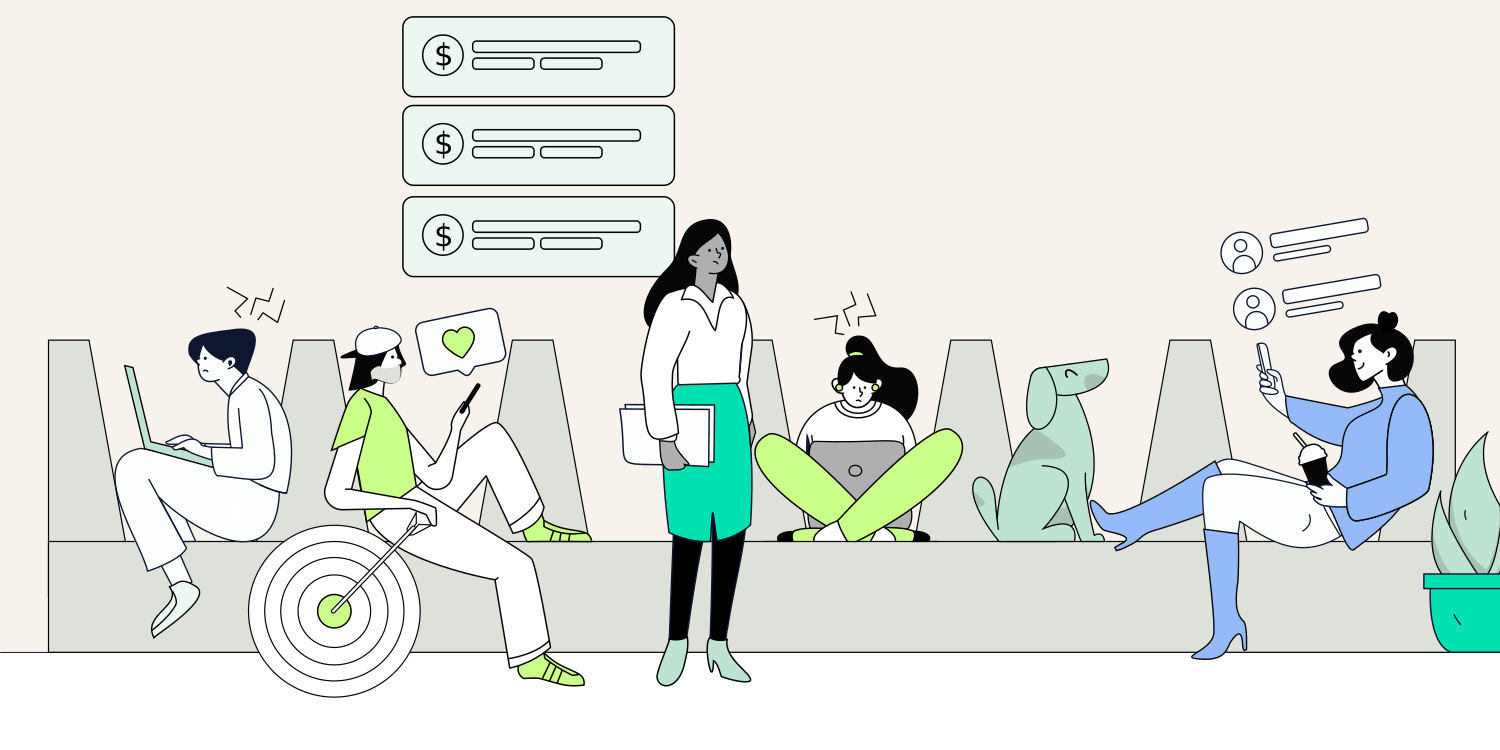
This shift in priority isn’t just a phenomenon we see at the supermarket; it’s impacting our digital experience as well. “Enshittification” was coined in 2022 by Canadian writer Cory Doctorow to describe how online platforms like Facebook and Amazon have switched their focus from being user-centric to dollar-centric. And everyone’s go-to business networking platform, LinkedIn, is a textbook example.
As of early 2026, LinkedIn had about 1.2 billion registered members, which is about 14.5% of Earth’s entire population. Securing just one extra dollar per annum from each registered user equates to a substantial impact on bottom line profit.
If you’ve been on LinkedIn since the early days, you’ll remember it as a free-to-use business networking tool where you effectively collected digital business cards. The platform then evolved so you could message other users, and next you could post opinions and thoughts. Now you can do all of that alongside advertising, posting jobs, learning new skills, and more. It is a vehicle for building your personal and corporate brand. And yes, while LinkedIn still offers a free, basic account for creating a profile, networking, and job searching, they have successfully got us paying for enhanced features like seeing who has viewed your profile, sending InMail messages, and using LinkedIn Learning. By adding key features behind a pay-to-play wall, they enshittified the free solution.
User feeds are now bombarded with sponsored, pay-to-promote content and targeted advertising. The algorithm now prioritises divisive and polarising posts, taking a page from the Facebook playbook to keep users hooked rather than feeding them more relevant, less click-baity content. Posts with a photo of the author seem to be prioritised over those without, all of which reduces the member to nothing but a number.
But unlike the FMCG chocolate bar manufacturers that cloak their deceit in swift packaging redesigns or supermarket promos, LinkedIn’s shift from professional networking to a content-driven platform has been subtle, hoping we will get used to a new experience dominated by “hustle culture” performative posts, AI-generated slop, and insincere, self-congratulatory content.
You will have numerous other examples in your digital world: from Amazon luring you into Amazon Prime, your digital TV channels or music streaming service adding ads and then pushing you to pay to go ad-free, or your phone provider charging you progressively more to store thousands of photographs you never look at in cloud storage. The clutter and user experience friction this creates is enshittification in action.
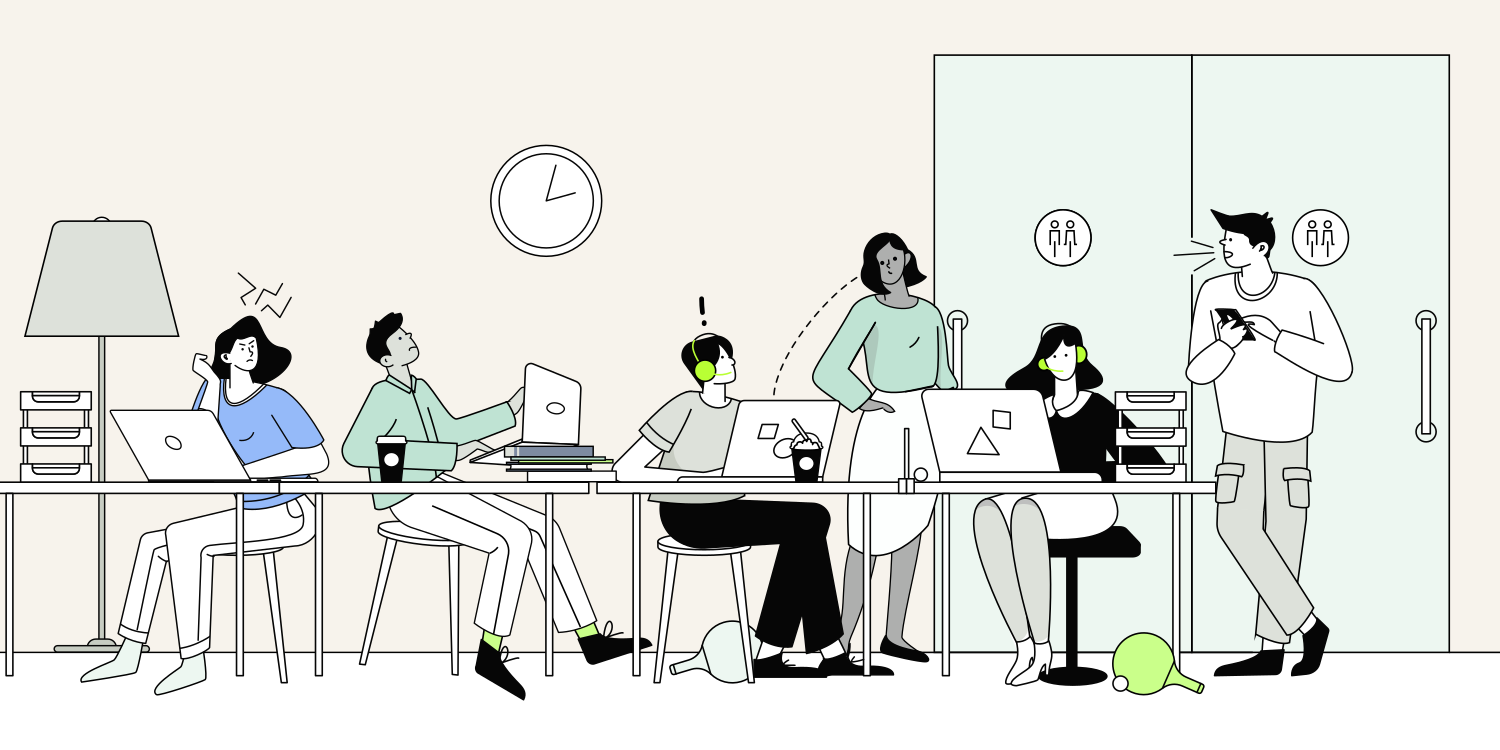
Workplace has undergone a similar journey in many regards. As a new digital era removed CRT computer monitors that required “corner core” workstations, desk footprints suddenly shrunk. CFOs chuckled as designers could suddenly fit more desks (people) into less space. As we progressively saw the office turn paperless, millions of linear meters of metal filing cabinets were removed, and once again designers proudly impressed clients by fitting more desks (people) into even less space. Then desks got smaller again, shrinking from 1800 mm to 1600 mm, directors lost offices, and suddenly we all realised we had been the victims of a progressive workplace shrinkflation: more desks in less space, hoping the employee won’t notice. Then desks went to 1400 mm and like the Toblerone, the employee really does see the difference.
Then came an era of frustrated workplace designers, who acknowledged this sea of open plan desks was less than inspiring. They redirected their attention to creative expressions elsewhere, through a feature staircase, a bank of bleacher seating, a work library, a neon-lit dining hall or a lavish client hospitality space. Yet these spaces almost always come at the expense of seeking a deeper understanding of the actual work being done by millions of employees sat doing deep, concentrative work in the now open plan workplace.
Popular commentary, social media clickbait case study shots and industry self-appreciation awards have merely amplified the noise, drowning out common sense and old-fashioned craftsmanship.
Then the pandemic hit, and one startling fact emerged: the average home supported the average knowledge worker better than the average office. And the more employees worked from home, the bigger the chasm got, compounded by how organisations learned to work differently, further undermining the perceived value of the office in organisational performance. Empowered employees found they could create better workplaces in their spare bedrooms, garden sheds or under-stairs cupboards than could whole professional teams of workplace designers and strategists.
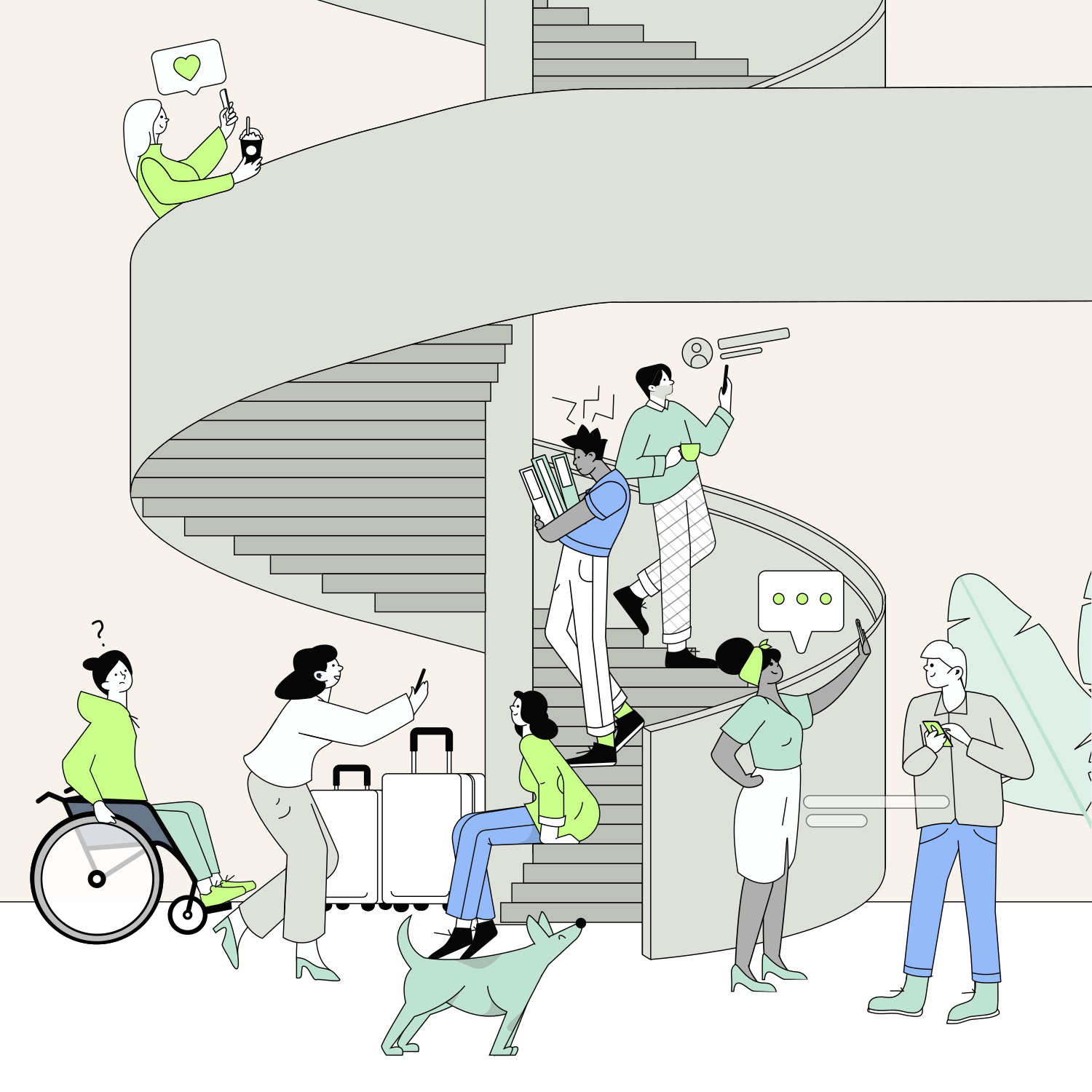
The workplace strategy and workplace design industry had been found out. The employee – for whom the workplace is supposed to be a tool in personal performance – is fed up. They want better. They don’t ask for feature staircases or themed cafes or bleacher-seating knowledge sharing spaces with dodgy AV and rubbish acoustics. These spaces photograph well and attract LinkedIn likes, but beyond the case study write up are riddled with lost opportunities to design places that help employees defend against cyber-attacks, design cleaner energy solutions, attract the best talent, code with fewer bugs, or help cure cancer faster.
It’s like design has forgotten the basic premise that it’s more important for stuff to work superbly than it is for it to look beautiful. Form must follow function. But perhaps clients also have played some part in the decline by not supplying designers with a business brief that specifies the desired business outcomes that designers can respond creatively to – not in terms of seats per square meter, but in terms of specific business performance metrics. How can a workplace be seen as part of strategic corporate growth plan when the designer of the place is not given specific business requirements the space should contribute to achieving? And remember, the overall experience those spaces offer carries on being experienced by employees long after the cost or shortness of fit-out programme is forgotten. The shrinkflated, enshittified workplace prevails.
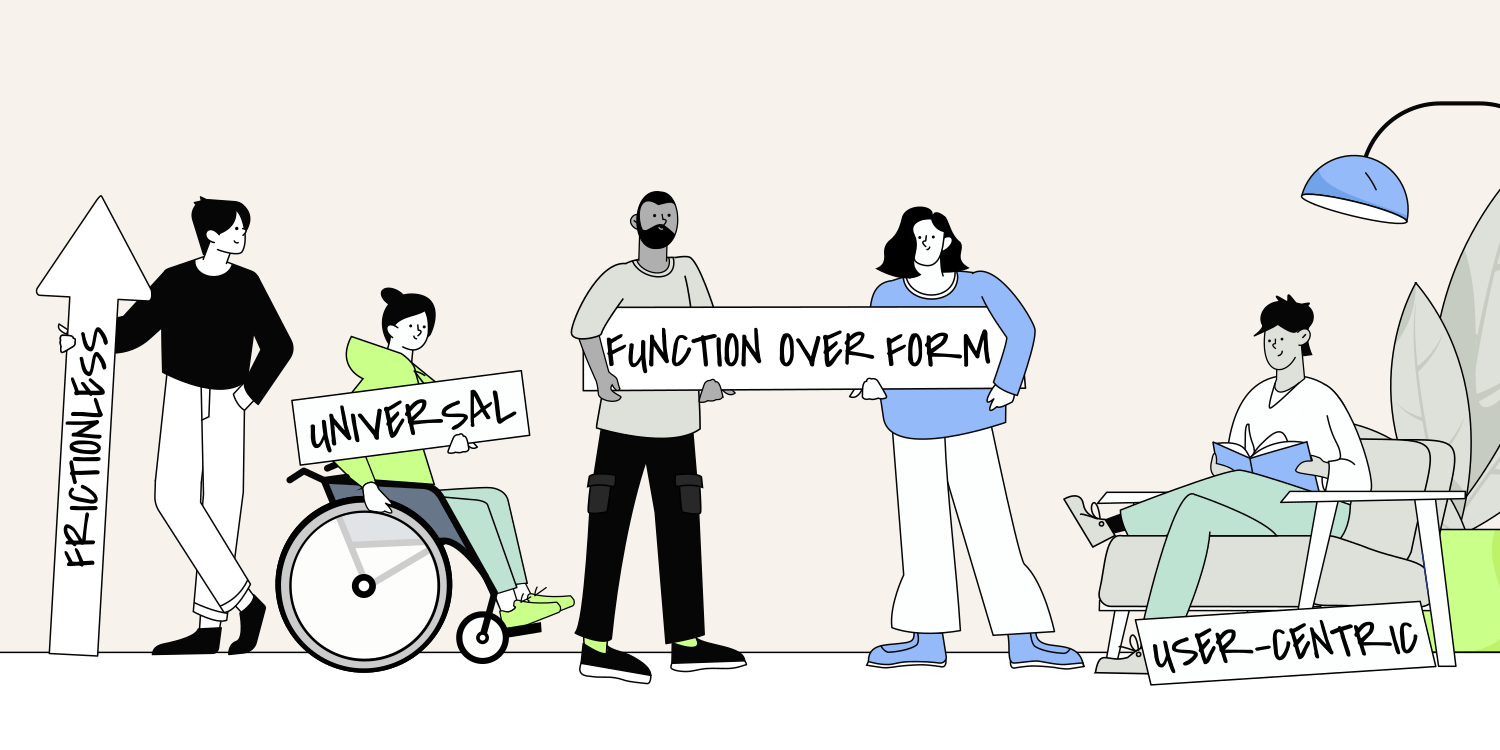
Enter deshitifcation – the reversal of years of workplace shrinkflation and enshittification. It’s our call to first and foremost focus on the day-in-the-life experience of the employee in the role they are in and what a business projects it will need in the workforce of the future.
It means unnecessary aesthetic embellishment cannot come at the cost of supporting the employee do the work they are employed to do. It means interconnecting staircases don’t automatically have to be feature staircases. It means casual spaces for larger audiences can have chairs with upholstery instead of hardwood tiered terraces. It means desks and the spaces between them are thoughtfully considered, and the tasks an employee does in the office are deeply understood. And it means recognising that throwing a few sofas and mobile whiteboards in leftover space between ranks of desks and calling it “open team collab” disturbs the focus of those sat adjacent and fails to address the lack of psychological safety associated with sharing ideas in an open forum.
The shrinkflation and enshittification of workplace doesn’t sit wholly at the feet of the design profession; this has crept up somewhat accidentally over decades on a whole industry of professionals. It was never a direct corporate strategy to squeeze more from less for hidden shareholders.
Deshitification is about reversing those decades. It means places that work for the individual user also work for the corporate employer. They are frictionless. They can look great, but they must work well. They will probably observe a new set of carefully considered personal space standards that respect the employee as the beating heart of the organisation. It is about building places that work for users and the work that’s being done there, and it puts the brakes on reinventing the wheel for pure creative fulfilment.
Deshitification creates places where employees feel they get more done, feel more respected for the contribution they make, and ultimately stand a greater chance of enjoying the work they do. Perhaps in time, those employees will even appreciate the role an entire real estate and design industry played in designing and building places where they can do their best work, and who knows, it may even turn them into brand advocates.