
Date
Most organisations claim to want innovation, but what they often mean is they want something new that behaves predictably. Radical innovation rarely results from following a formula and often looks like a bad decision right up until it doesn’t. The question isn’t whether to have a rulebook – it’s when to step beyond it or to rewrite it, because we have seen what happens as a result can transform industries, win races, and even save lives.
Iconic American film company MGM Studios was born in 1924 in the golden age of Hollywood. In the late 1930s, they decided they should try to cash in on the huge success of Disney’s Snow White and the Seven Dwarfs with their own spectacular fantasy based on a classic children’s tale.
Executives chose L. Frank Baum’s The Wonderful Wizard of Oz, seeing in it the opportunity to bring together a team who could exploit the best of 1930s cutting edge filmmaking techniques, throwing huge budgets at the production to create something at a scale and with a visual marvel never before seen by audiences.
Today, film historians acknowledge the 1939 production of The Wizard of Oz as truly groundbreaking. Yet at the time, box office audiences were underwhelmed, and any moderate praise was drowned out by that lavished on MGM’s more predictable adaptation of Margaret Mitchell’s novel Gone with the Wind, released just four months later. American audiences, barely emerging from the Great Depression and seeing Europe heading towards another bloody conflict, favoured a more relatable Civil War tale of a petulant southern belle’s tangled love affairs over the adaptation of a fairy tale about a Kansas country girl mysteriously transported to an over-the-rainbow make-believe land, trying to get home supported by nothing more than a pet dog and a band of ham-fisted antiheroes to help.
Gone with the Wind won eight Oscars, including Best Picture, to Oz’s two, and held the record for the highest-earning film for more than 20 years.
It looked like MGM’s big budget experiment with Oz hadn’t worked and the success accompanying Gone with the Wind led executives to wonder whether the huge costs associated with breaking cinematic boundaries was really worth it.
And despite the light-hearted fireside family viewing they were trying to create, some of the stories from the set of The Wizard of Oz are far from cosy. For such a beloved, ostensibly fanciful film, the making of The Wizard of Oz was six months of filming misery for many of those who worked in front of the cameras and behind the scenes.
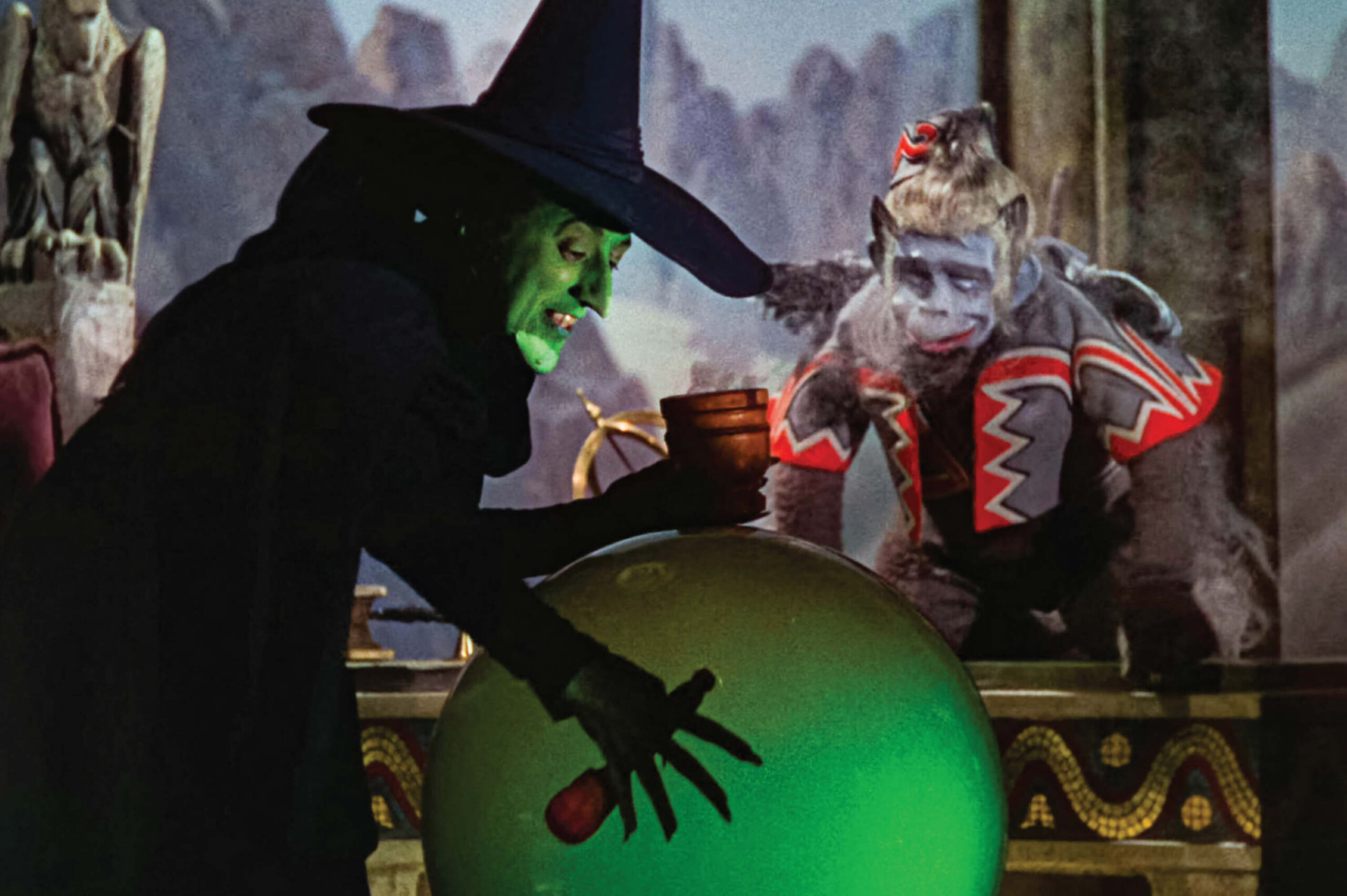
Stories abound of adjustments that had to be made on the fly to costume colours, lighting rigs, and even the special effects, all to make absolute best use of the new Technicolor film technologies. The darker side of innovation is also well-documented, with tales of the witch’s green copper-based makeup being so toxic that the actor was restricted to a liquid diet taken through a straw while wearing it, and the first actor cast as the Tin Man nearly dying from an acute allergic reaction to his aluminium costume. Asbestos fibre was used as fake snow in numerous scenes, and actors cast as the Wicked Witch’s flying monkeys regularly literally fell victim of the piano wire used to fly them across the set snapping midway.
Then there was the new technology of pyrotechnics, which inflicted horrific burn injuries on numerous cast members, while those in heavy costumes were regularly passing out on set under the heat of the additional lighting needed by the Technicolor cameras. In one incident, the heat from the lights caused a fire that almost destroyed the entire set of Emerald City.
Even Toto the pet dog had to be understudied for four weeks after a cast member stepped on its paw and broke it. Other stories of Munchkin actors looking to let off steam after 12-hour days on set being involved in nightly bar brawls with locals are believed to be overstated, but sinister stories of them taunting and molesting Judy Garland on set were later acknowledged but sadly brushed aside. The saddest of all was the undisputed admission that 16-year-old Garland was placed on a strict diet and given amphetamines and cigarettes to control her weight and keep her energy levels high during gruelling days on set, coupled with sleeping pills at night to counteract the “uppers”. To add insult to injury, she was also laced into a curve-flattening corset to give the impression she was much younger.
Behind the camera, the creative direction of the film changed hands almost as often as the Scarecrow tripped over his own feet. The first director shaped Oz as a more conventional fairy tale, but MGM soon decided the tone was off and replaced him, binning much of the content he’d filmed.
Prominent American film director Victor Fleming was eventually brought in to take over and is credited as giving the film its brisk pace and central focus on Garland’s character Dorothy confronting her fears and her growing bond with her companions, conflicting with her aching desire to leave them and get back home. But even Fleming couldn’t see things to a conclusion and was pulled from shooting, leaving another director to finish the Kansas scenes, including Dorothy’s timeless plea in “Over the Rainbow”. Fleming was redeployed to Gone with the Wind.
So, by modern standards, the making and production of The Wizard of Oz was a mess.
But twenty years after its first screening and dismal box office earnings, MGM agreed a pay-per-broadcast deal with CBS to bring Oz to TV audiences. It was soon making MGM $1m on each screening, with more than half of American television viewers tuning in to watch the musical from their own homes. The Library of Congress credits it as the most-viewed film in history, and in a recent People magazine poll, it was chosen as the favourite film of the twentieth century.
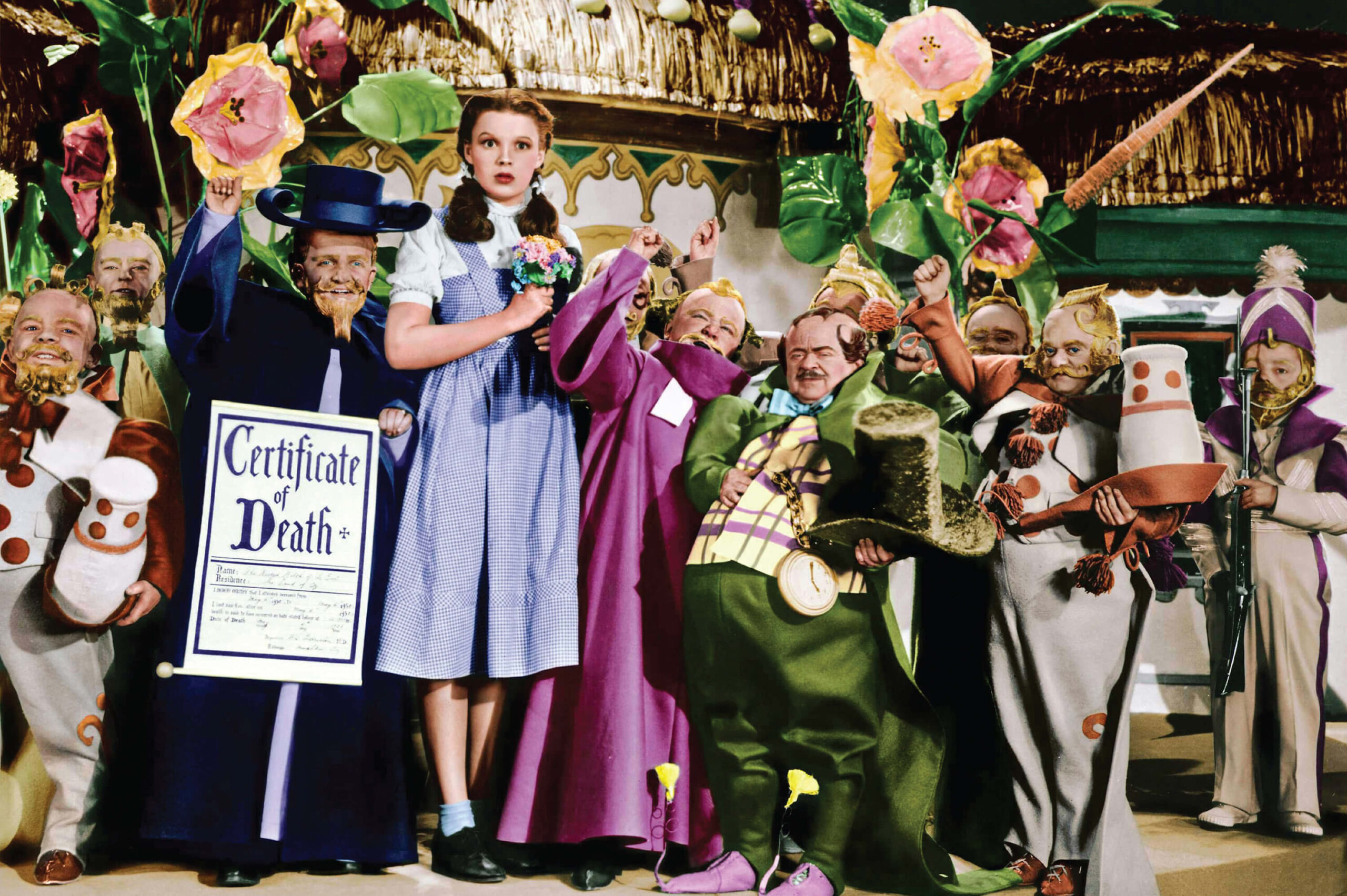
From some angles the making of The Wizard of Oz was a tale of enterprising ambition, where from others it was one of constant mayhem, but cinematic magic and financial success ultimately emerged from the chaos.
In a head-to-head between creative chaos and tried-and-tested order, business leaders will almost always favour the latter. Chaos surely equates to unpredictability, to risk, and as The Wizard of Oz proved, sometimes even to outright danger.
Competitive success is rarely correlated with the unstructured chaos typically associated with breaking new boundaries.
Psychologically, we humans struggle with turmoil. Yet in recent years both the novel and the film adaptation of Gone with the Wind have faced criticism and calls for bans due to their portrayal of race and slavery. Some educational institutions and libraries have chosen to remove the book or limit access to it, particularly in light of discussions around racial sensitivity and representation. Some streaming services that initially pulled the film now make it available, but with an introductory disclaimer and additional historical context rather than editing or cancelling it. Why not test boundaries and push the envelope when what’s safe today may not be safe for your future anyway?
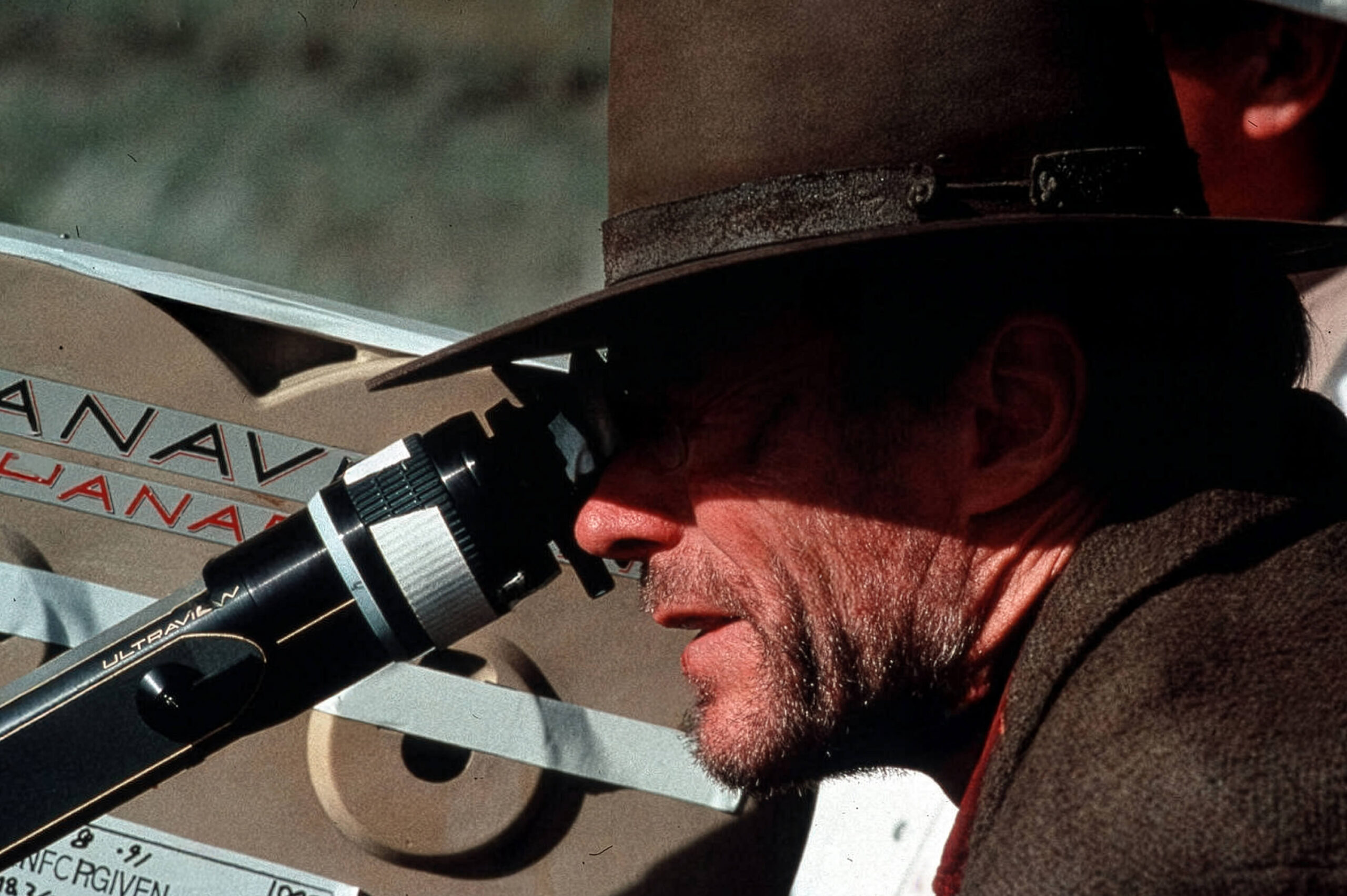
Clint Eastwood revolutionised the film industry, but in a much more subtle way. Eastwood made his cinema film debut in 1955, but the role that helped establish his career came in the TV series Rawhide, which premiered in 1959. Five years later his big screen breakthrough came with his portrayal of the “Man with No Name” in Sergio Leone’s Dollars Trilogy, starting with A Fistful of Dollars in 1964. The role established him as a major star in Hollywood, but his next outing in The Good, The Bad and The Ugly is still lauded as the greatest western of the genre.
He later spoke of the tension on the sets of those early big budget westerns. Eastwood would be sitting peacefully on the back of a horse, ready to shoot a typical dusty, sulky Sergio Leone scene. When everyone was assembled a crew member would shout, amplified through a megaphone, “Quiet on the set!” Then an assistant director would shout to the sound engineers to “Roll sound!” The sound engineers would shout back even louder, “Sound rolling!” Then the camera operator would shout, “Camera!” and then the loudest in the escalating orders eventually came from the director when they proclaimed, “ACTION!”
By now the horse was well and truly spooked, and costly minutes were consumed settling it back into the sullen atmosphere the director was aiming for, if indeed they didn’t intervene first by screaming, “CUT!”
So, in the 1970s, when Eastwood eventually took to directing his own feature films, he started developing a wholly different and innovative approach to how his film sets would operate: one that prioritised a quiet environment centred around respect and efficiency.
He believes cast and crew should bring their A-game to the set because they’d done their preparation beforehand and trust in his vision. In stark contrast to the experience he’d had with crews and directors as a young actor, making multiple takes as they worked things out on the fly, Eastwood would, when each team member quietly acknowledged they were ready to roll, simply hold an index finger up at shoulder height – just high enough to be seen by everyone who already had eyes on him waiting for the cue – and he’d circle it in the air a couple of times and calmly say something along the lines of, “OK, let’s go.” In Eastwood’s eyes, the set was not a place to rehearse or iterate; it was a place for a creative team to capture on celluloid the collective result of their individual efforts.
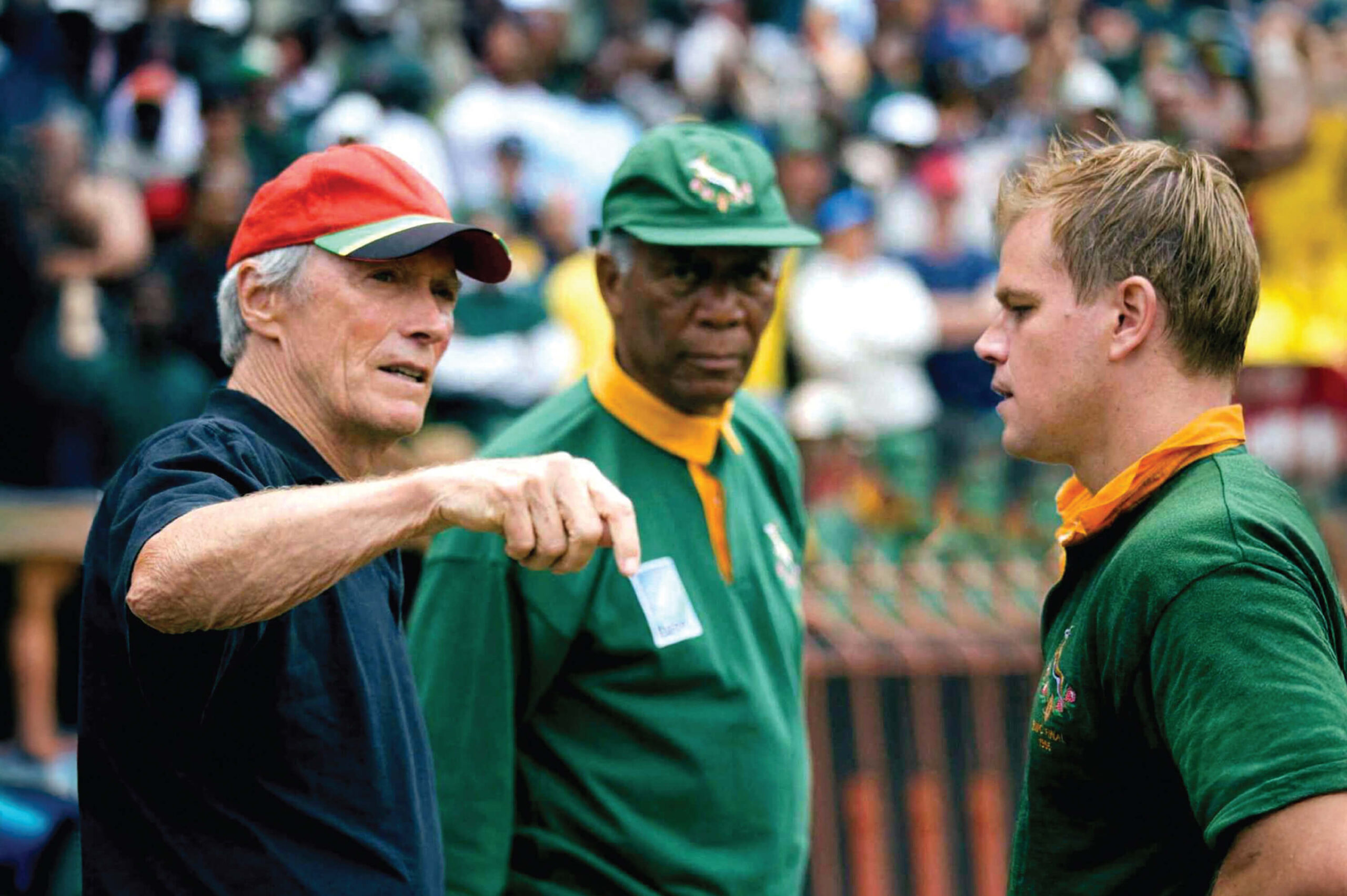
As cast and crew members became familiar with his methods, other distinct differences started to mark his efficient directing style. In 2009 he directed Invictus, casting Morgan Freeman as President Nelson Mandela and Matt Damon as Francois Pienaar, the captain of the South African national rugby team, in an account of the team’s 1995 Rugby World Cup entry.
Damon reported he was somewhat terrified of getting the South African accent just right for Eastwood, but at the end of the first take of his first key scene on the first day of shooting, Eastwood said “Cut, print”, signalling he was happy. Damon, who was more used to directors making multiple takes, pushing actors to settle in or experiment with different intonations in search of the best possible result, replied with a, “Hey boss, do you think maybe we should try one more?” Eastwood replied, “Why? You want to waste everybody’s time?” The potential creative marginal gains associated with a second or further takes were, in Eastwood’s eyes, frivolous and unnecessary. Damon had done what he was asked to do as well as Eastwood expected. Time to move on.
Eastwood himself has described his directing style as “minimalist”, focusing on straightforward storytelling with little unnecessary embellishment.
He believes this approach creates a more authentic and impactful narrative. His films frequently emphasise character development and moral complexity, allowing audiences to engage deeply with the characters’ journeys. He prefers a naturalistic style, often using real locations over expensive sound-stage sets, and avoids excessive special effects, helping ground his cast and stories in reality.
This highly researched, meticulously prepared style of filmmaking has landed Eastwood numerous Oscar nominations and wins, most notably with the 1992 Unforgiven picking up Best Picture and Best Director, and his 2004 Million Dollar Baby achieving the same accolades. Academy Awards for leading or best supporting actors have been handed to Gene Hackman, Sean Penn, Tim Robbins, Hilary Swank, and Morgan Freeman in Eastwood-directed films.
Few would describe Eastwood’s films as safe, but his directing style is dramatically different to what the industry had become accustomed to. As audiences, we might not immediately appreciate the impact of those differences, but his casts and crews certainly do, and his efficiency is reflected in the budgets needed to produce his epics.
Like Eastwood’s approach to filmmaking, the application of order and precise, well-rehearsed organisational discipline is undoubtedly a critical part of some top-performing organisations’ DNA.
The creative tension between a highly structured, efficient, rehearsed Eastwood-style approach and one that embraces the chaos and experimentation like in the Wizard of Oz are explored through his own examples in wonderful detail in Tim Harford’s book Messy. It is a call to embrace the opportunity to ignore established protocols, systems, and structures in search of new opportunities hidden in disorganisation, improvisation, and confusion. It opens with the case study of 1970s jazz concert promoter Vera Brandes.
It is the afternoon of 27 January 1975, and at just 17 years of age, Brandes was on the verge of pulling off the most incredibly audacious start to her career, having convinced both renowned American improvisational jazz pianist Keith Jarrett to perform a midnight recital and the Köln (Cologne) Opera House to host it. Her work to promote the event had resulted in a sellout audience of 1,400 attendees. Within hours, Jarrett would walk onto the stage and sit at his specified Bösendorfer grand piano, having had no rehearsal and without sheet music to follow, and play a whole set of improvised jazz. Brandes had planned and executed everything down to the finest detail.
Except administrators at the Opera House, perhaps in snobbish disdain at the idea of late-night jazz in their renowned operatic venue, had failed to organise the exact specification of piano. When Jarrett arrived at the venue and walked onto stage, he was confronted with what by Brandes’s own admission was a “tiny, out-of-tune Bösendorfer where the black notes in the middle didn’t work and the pedals stuck”.
Jarrett didn’t have to try too many keys before condemning it as unplayable. What was to have been the most incredible start to Brandes career was starting to look like the very premature end of it. She tried to get the Opera House to correct the mistake, but they said there was nothing they could do in time. She phoned every contact in Köln to find another piano and did locate one but could find no piano mover to move it. Upon rounding up enough friends to push it through the streets, the piano tuner told her it would never survive the torrential rain.
In desperation she tracked down Jarrett, now in his car ready to leave, and pleaded with him to play. Surprisingly, he agreed. At midnight, Jarrett walked apprehensively onto the stage at the packed venue and sat at the pitiful piano. And then something remarkable happened, and the recording of that night’s performance would become one of the best-selling piano recordings in history.
As an acclaimed musician, Jarrett’s reflex had been to reject the substandard instrument; in many ways it presented a direct threat to his acclaimed status. To take to it and fail could be catastrophic, yet his art form was improvised jazz – that is to say unscripted, and in that moment he realised that in dismissing the piano as beneath him, his approach to performance had become formulaic.
The piano deemed unplayable actually pushed him to truly improvise – to go beyond the limits of his own rulebook. The stuck keys and pedals meant there were areas of the keyboard he would have to explore that were not part of his traditional repertoire, and given the paltriness of the piano in this huge venue, he would have to pound the keys to extract volume in a way he had never before needed to do.
Fifty years later Jarrett has taken the stage again, this time played by an actor in the critically acclaimed film Köln 75, which chronicles Brandes’ tenacity and perseverance in convincing Jarrett to perform.
Harford’s book explores these themes in much greater detail across multiple case studies, examining the risk associated with knowing how to do things well, presenting a direct blocker to properly exploring whether there are alternative, perhaps messy ways to do things differently and who knows, maybe better.
Jarrett produced a performance that would become celebrated across the jazz world, from an instrument that was unplayable because in that moment, he was brave enough to push beyond his own established ways of doing things.
This seems miles away from the real estate and workplace experience challenges Aéto helps clients navigate, but these case studies have many parallels. In the “Golden Age of Hollywood” MGM were aiming to release a new film every nine days – that’s 40-50 films a year. At that cadence some could be experimental, but most would need to be formulaic simply to maintain the pace. For Aéto clients with global portfolios of 400+ workplaces, the same is probably true. Of the 40-50 capital projects undertaken in any given year, most will need to adhere to a core set of standards, but three or four could push the creative envelope, helping shape a new standard for “standard” projects in the years to come.
Equally, where we’ve helped a client crystalise their vision for a once-in-a-generation campus redevelopment that could change the trajectory for an entire region in Scotland, there is no formula, and simply adopting industry standards to apply a generic blueprint misses the opportunity for the project to be truly groundbreaking and impactful.
So, when is it better to choose radical innovation and when is it better to play it safe? And if playing it safe becomes the default, how do you identify when the tried and tested formula should perhaps be thrown to the wind when faced with what looks like an impossible situation?
We help our clients navigate challenges of this sort by focusing on situational awareness. Whether you are in a predictable situation that suddenly goes differently or you are setting out to innovate and break new ground, remaining aware of the context in which you are operating and remaining humble to the observations offered by those experts around you can make the difference between success and failure. The case of jazz musician Keith Jarrett is perhaps the most salient to remember – his extraordinary skill was improvisation, but his improvisation itself had become formulaic.