
Date
It may seem like an odd place to turn to for inspiration, but leaders can learn a lot from how various countries set up and run their criminal justice systems. The parallels with real estate are particularly stark, but we’ll explore more on that later.
The idea of prisons as structures designed for confinement was first seen in London in 1556, but the modern penitentiary concept began in the US, with the Massachusetts State Prison (1785) often cited as the first designed for penitence, and Eastern State Penitentiary (1829) in Philadelphia credited with “pioneering” solitary confinement for reflection. Ancient places like the Tower of London held prisoners but weren’t prisons in the modern sense.
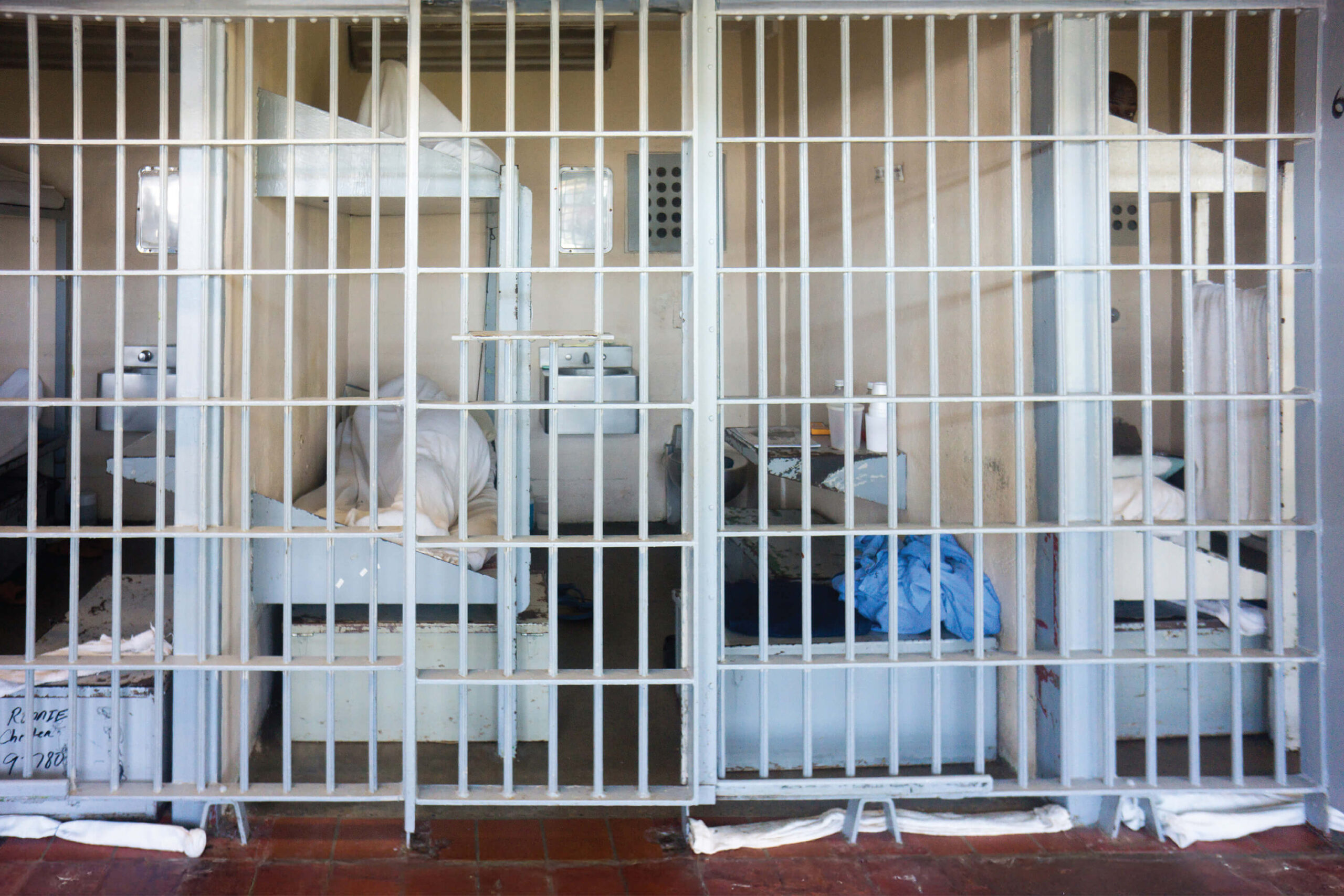
In the US, the criminal justice system is in a perilous position. The present-day mission of the US Department of Justice is, “To enforce the law and defend the interests of the United States according to the law, to ensure public safety against threats foreign and domestic, to provide federal leadership in preventing and controlling crime, to seek just punishment for those guilty of unlawful behaviour, and to ensure fair and impartial administration of justice for all Americans.”
The criminal justice system in the US has been set up to deliver on its mission, with those convicted often serving lengthy sentences in a vast network of federal and state prison facilities, some privately run. There has been a substantial increase in the prison population since the 1980s, resulting in the US having an incarceration rate of 541 per 100,000 people as of 2022.
As of 2024, the US had more incarcerated people than anywhere else in the world, holding more than 1.8 million people in prison according to the World Prison Brief (WPB). And there are no signs of this trend slowing.
Norway, by contrast, had 3,052 prisoners in 2024 and an incarceration rate of 55 per 100,000 people according to the WPB, one tenth of the US’s incarceration rate. But it wasn’t always this way. In the 1990s, the Norwegian criminal justice system very much mirrored the US structure, centred around the belief that punishment would deter criminals. The data, however, proved otherwise. The two-year recidivism rate, i.e. the rate at which prison leavers reoffend within a certain timeframe, was around 70% at the time, meaning about 70% of people who had been in the Norwegian prison system were arrested for committing another crime within two years of release (for context, the recidivism rate in the US at the time of writing is similar). Not surprisingly, the crime rate was also high, and prisons were dangerous places.
Unhappy with the direction of travel, the Minister of Justice decided drastic change was needed, so she commissioned a white paper that focused on changing the prison officer role. Are Høidal, who joined the Norwegian Correction Service in the 1980s, was governor (warden) of the Oslo prison at the time and counts himself “lucky to be part of the working group who should make this white paper”.
Høidal explains that the outcome of the paper was a dramatic change in direction: rather than focusing on crime and punishment, they decided prisons should focus on rehabilitation. Prison officers at the time were guards who were mainly responsible for security. The vision for the officer role in the future was one focused on inmate rehabilitation through building relationships with inmates and ultimately motivating them to stop being criminals.
The project team also visited various prisons around the world, including a Canadian prison to see how they approached programmes and activities in the prison as well as one in New York to see how they approached drug addiction, to learn about other successful programmes they might incorporate into their newly reimagined system. They looked beyond solving the problem of needing more prison space for a steadily increasing number of prisoners and instead defined a longer-term success statement around rehabilitation.
The transformation looked simpler on paper, of course than it was in reality. As governor at Oslo prison, Høidal was responsible for leading the change in approach to a shallower authority gradient at this prison and was met with resistance – many officers at the time were comfortable in the “guard” role and didn’t see themselves as social workers. He estimates the change took five years and a lot of hard work, but he was able to turn the tide.
The present-day mission of the Norwegian Correctional Service reflects that approach, stating: “The task of the Norwegian Correctional Service is to ensure a proper execution of remand and prison sentences, with due regard to the security of all citizens and attempts to prevent recidivism by enabling the offenders, through their own initiatives, to change their criminal behaviour.” This purpose now serves as their north star and drives every aspect of the Norwegian prison rehabilitation culture.
This clarity of mission also ensures that the prison staff are preparing future-ready inmates. Høidal explains why, “In Norway, almost 99% of inmates will be released, and we have quite short sentences in Norway. We [will] release your neighbour. Who do you want that neighbour to be? Do you want it to be a person who is rehabilitated?” The actions and attitudes of the officers have a direct impact on the future of their own communities. To help ensure a smooth transition from incarcerated life to life outside of the prison, prison staff work closely with authorities outside of the prison to ensure the inmate has support from the community long before release – helping them find work, a place to live, and a place within the community.
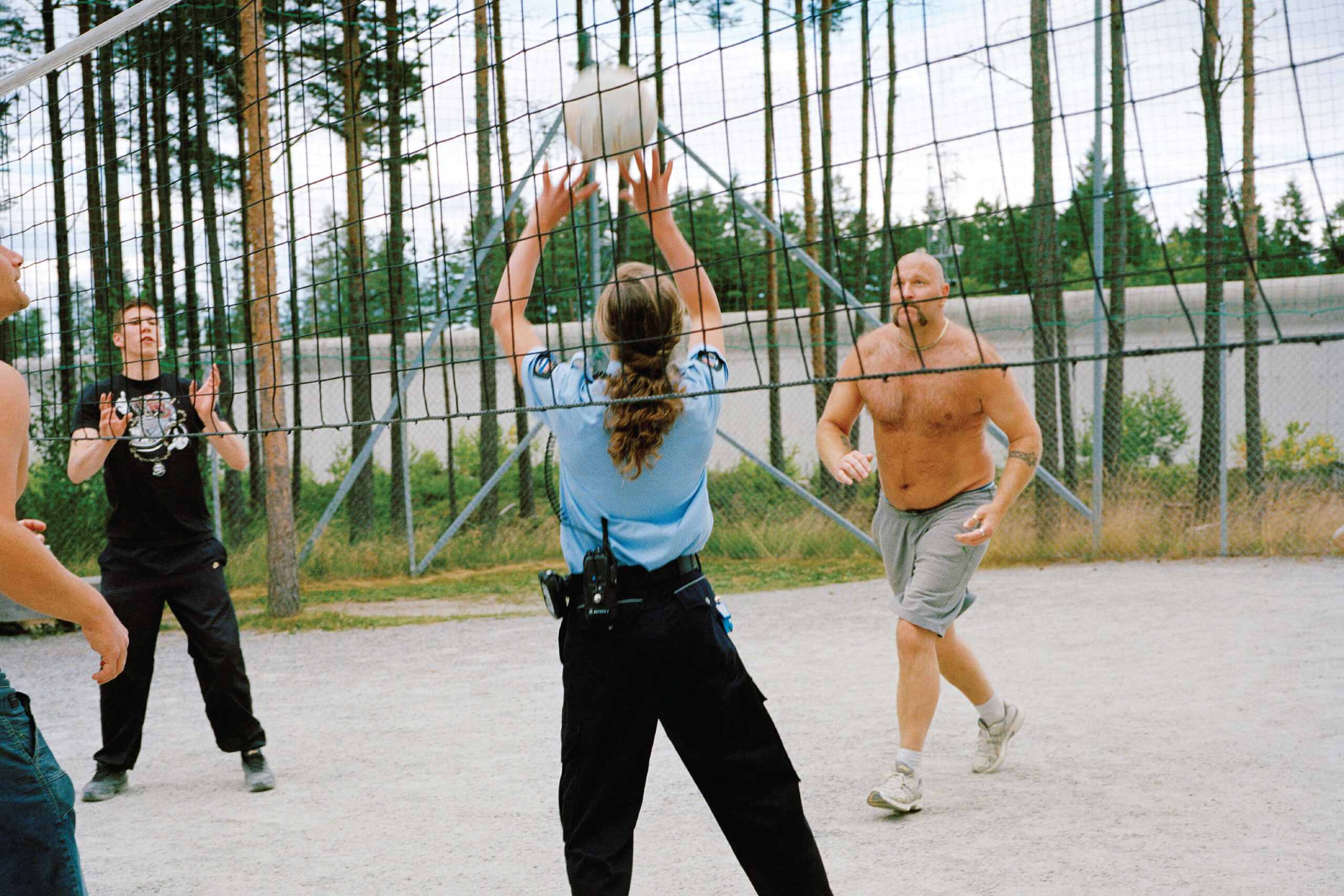
One of the major changes that resulted from the original white paper was the training programme for officers. Officers in Norway complete a two-year specialist degree focused on law, human rights, criminology, psychology, and ethics to prepare themselves for the role of helping rehabilitate the inmates. In contrast, the training for correctional officers in the US typically ranges from a few weeks to a few months. In addition, prison staff in Norway don’t carry weapons, and about 40% of them are female. Officers and inmates partake in everyday activities together, including sharing meals and playing sports, and there are common areas where they comingle.
In what would certainly be considered innovative when compared to traditional crime and punishment systems, the Norwegian system operates under the “principle of normality”. The goal is to keep life inside the prison as close as possible to life outside to make the reintegration into society post-incarceration seamless, thus increasing the chances of rehabilitation – and this centres around community in every sense of the word.
To achieve this, Norway has set up a network of prisons across the country to ensure that inmates can maintain a connection to their family, community, and employment during their incarceration.
There are 57 prisons in Norway, a country with approximately 5.5 million people, that house approximately 3,000 inmates per year. Prison sizes range from 15 cells to 400 cells, with the average prison having 70 cells.
Maintaining a sense of normality while in prison also requires an ongoing connection with family and community, hence prisons are built within or nearby communities around the country, so inmates can maintain ties with loved ones. Many prisons allow prisoners to have visitors up to three times per week, and around one third of inmates are housed in minimum-security “open” prisons. These “open” prisons give inmates the freedom to spend most of their day outside of their room, doing everyday activities like working, learning, exercising, and relaxing.
The community theme is omnipresent – prison location enables those incarcerated to belong to the wider community, while the prison culture simultaneously creates a community within the prison. And while maximum-security facilities have more restrictions because they house inmates convicted of serious offenses, they are still a far cry from traditional maximum-security prisons.
About a 1.5-hour drive south from Oslo is the picturesque harbour town of Halden, home to Halden prison – just a 15-minute drive from the town’s marina. This maximum-security men’s prison was opened in 2010, and in line with the Norwegian Correction Service’s main objective, its distinct purpose is inmate rehabilitation. With space for about 250 inmates, it is Norway’s third largest prison.
The Royal Ministry of Justice and Public Security, the government body that the Norwegian Correctional Service is part of, held a competition in conjunction with the Norwegian Directorate of Public Construction and Property to select the designers of the new prison. The north star for competition entrants was the inmate rehabilitation element, and the winners were chosen based on meeting that criteria in key areas of the design. A collaborative effort by Danish firm Erik Møller Architects and Norwegian firm HLM Arkitektur AS was selected as the winner, and the finished product clearly shows why.
The prison is set up like a campus, with separate buildings for housing, education, activities, and prison administration. Despite modern commuting being the bane of many employees’ existence, the Halden designers cleverly architected the need to commute among facilities, giving inmates both a sense of separation often found in everyday life outside of the prison and the chance to be in nature during the walk from one building to the next.
The site itself lies in typical Scandinavian pine woods, and with the wellbeing benefits of biophilia no news to most, nature has been incorporated throughout. Every cell includes a long, vertical window to allow maximum natural light into the room and maintain the inmates’ awareness of seasons changing. The windows feature safety glass rather than bars, offering a more “normal” experience and a more natural connection to the world outside. Rather than a cavernous concrete structure, the buildings are clad with a combination of bricks, steel, and wood.
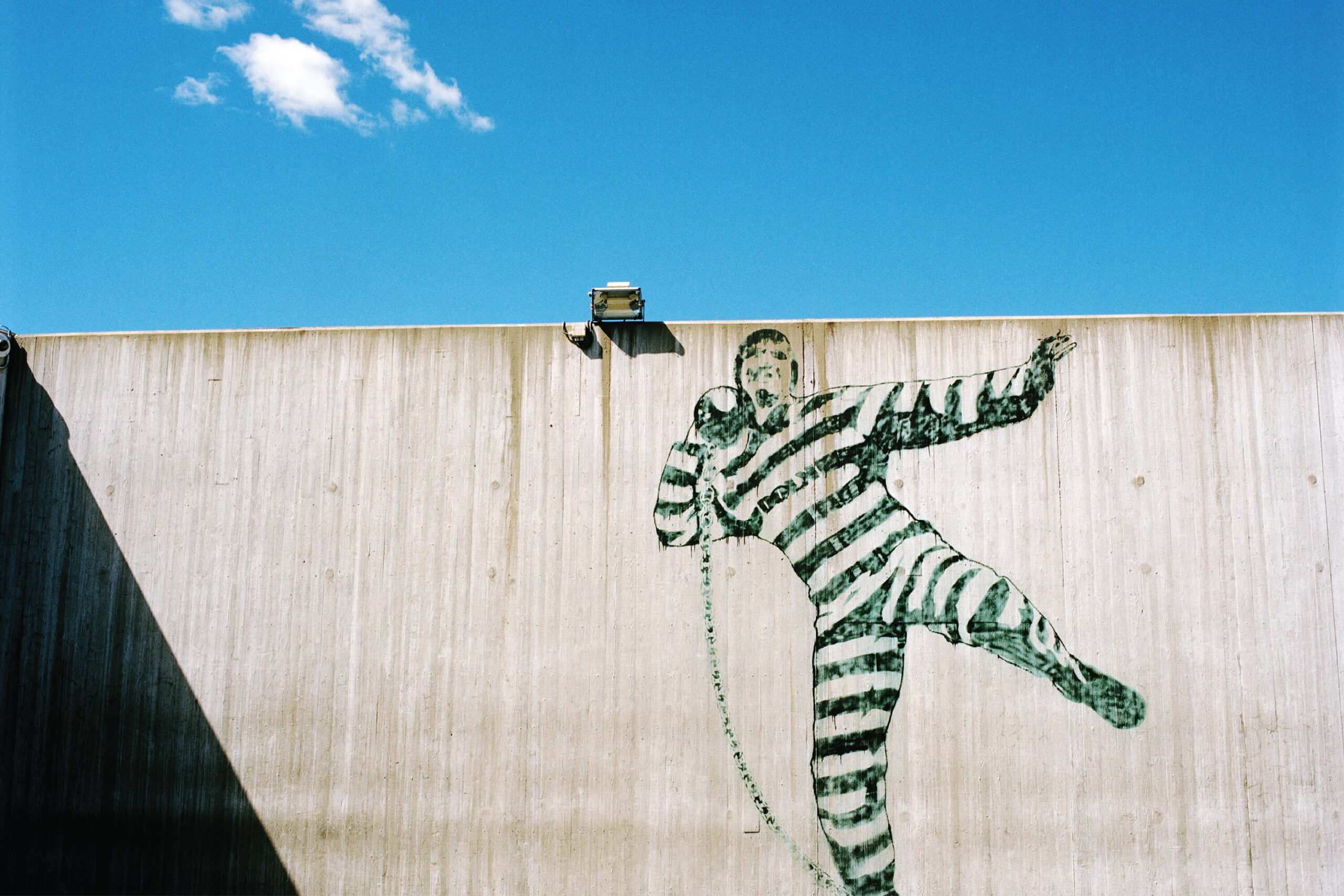
Art and colour have a place in the prison, as well. The project had a 6 million kroner (approximately £443,000 at the time of writing) art budget, and it wasn’t value engineered out along the way because the money was needed elsewhere, as so often happens in corporate real estate. Hallways are decorated with Moroccan tiles or huge enlargements of photos like flowers or streetscapes of Paris. Norwegian street artist Dolk was commissioned to paint the yard walls and toilet doors, with his image of an inmate clad in striped prison garb poised to shot put the ball and chain attached to his ankle exploring the boundaries and nature of imprisonment. Satire and comedy through art – in a prison.
After 20 years as governor of Oslo prison, Høidal took on the role of governor of Halden prison starting in 2009. He recruited a team of 290 staff to operate the prison when it opened the following year, keeping the rehabilitation mission top of mind. He was governor there for 14 years before transitioning to a senior adviser role for the Norwegian Correction Service in 2022.
Despite the department’s successes, when we spoke about what the future holds, Høidal is clear they aren’t resting on their laurels. “It cannot be good enough”, he states. He went on to explain the three main focuses in the coming years based on the latest white paper: closing old prisons – like the one Høidal used to run in Oslo – that weren’t designed under the latest standards, and building new prisons that reflect the values and missions of the Correction Service; working more closely with the healthcare system to support inmates with mental health challenges; and working on the rising problem of offenders as young as 13 in large cities. “Always things to do”, Høidal remarks.
Norway’s single-minded focus on rehabilitation to decrease recidivism hasn’t come cheap – in 2019 the cost of housing an inmate at Halden prison was about £98,000 per year. When viewed on its own and taken out of context, this high cost may cause anyone with a finance background to bristle, especially knowing the median annual cost to house an inmate at a US prison is about £48,000 per year. But Norway today has a five-year recidivism rate of around 25%, one of the lowest in the world, while the US’s recidivism rate hovers at around 70%.
Even with a much lower median cost per inmate, longer sentences combined with a huge inmate population in the US result in extraordinary costs to run a system that seems trapped in a vicious circle of delivering punishment instead of progress. Norway sees the relatively high cost of running its correctional facilities as an investment in less crime and reduced recidivism, and by many accounts it’s paying off, with community both a key driver and beneficiary.
The lesson here is not that spending more is always better, however; it’s that the cheapest option on paper can become the most expensive over time when it fails to address a problem properly or when the true purpose was never clearly defined. Yet this is easier said than done in CRE, where budgets are under constant pressure, benefits can be difficult to quantify, and the person making the investment may not be the person who ultimately sees the return. Investing more up front – in better design, quality, flexibility or infrastructure – can feel difficult to justify when the immediate cost is so visible and the longer-term value is harder to measure. The challenge for CRE leaders then is to make the case for real estate as an investment rather than simply a cost: looking beyond what a building costs today to understand what it enables the organisation to save, avoid or achieve tomorrow.