
Date
Boeing had suffered a series of setbacks in the years prior, with some reports suggesting they were staring down insolvency, so they decided to throw everything they had at their entry. It had been investing its dwindling resources in the emerging passenger aircraft market, so knew their entry would be a long shot, but decided to create a hybrid design from two tried and tested passenger aircraft models, stripping out the comforts aimed at the commercial passenger market and adding as much bomb-carrying and defensive armaments capacity as the airframe would support. They also chose to make it bigger and faster than the design specification had called for.
The result was the Boeing B-17. The four-engine aircraft flew further and faster and with a greater payload capability than either of the other two entries, flipping Boeing from underdog to preferred bidder. Based on their observations of early test flights, the Air Corps acknowledged that the B-17 would almost certainly be the winner. The Army planned to order at least 65 once the formalities of an official flying demonstration were completed, and the order would be increased to 200 once the first batch had accumulated flying hours in service and feedback from crews could be used to introduce further design enhancements.
On the day before its first official test flight with Boeing’s chief test pilot Les Tower at the controls, a reporter for The Seattle Times, taken aback by the unprecedented number of defensive gun positions sticking out from the new aircraft, described it as a “15-ton flying fortress”. Boeing was suitably flattered and had the Flying Fortress moniker trademarked.
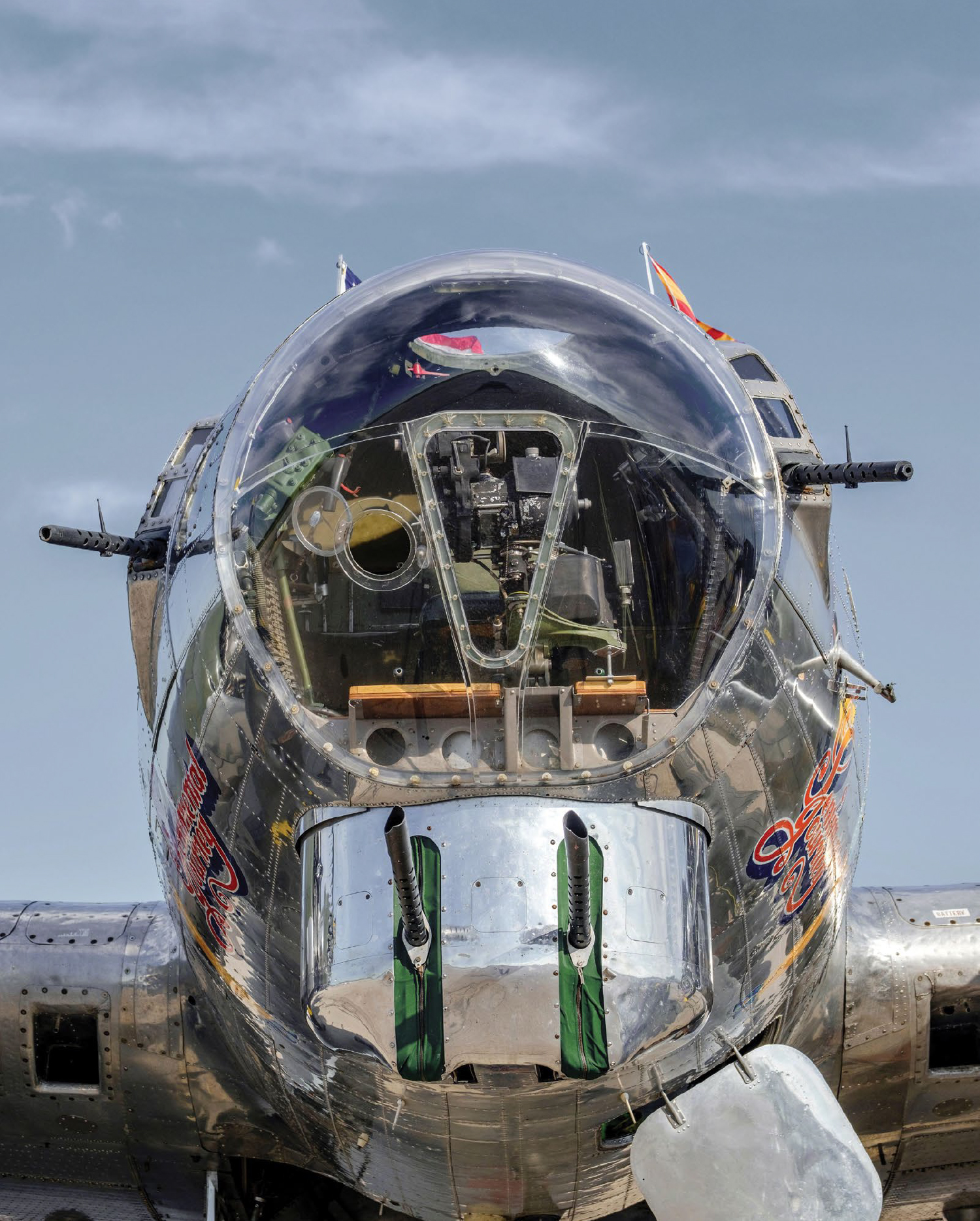
On 30 October 1935, the prototype B-17 Model 299 lifted off from Wright Airfield in Ohio for the demonstration flight with five crew members aboard, including renowned Air Corps test pilot Major Ployer Peter Hill in the Captain’s seat at the controls, with Les Tower stood next to him observing. It powered down the runway and climbed to 300 feet, but then quickly began to stall, losing lift, not because of a lack of forward thrust, but because the vertical angle of attack (AOA) was too steep. This leads to a sudden decrease in lift, increased drag, and within seconds the aircraft quite literally begins to drop from the sky with its nose still angled upward. To salvage the situation the pilot needs to urgently get the nose facing down to regain airflow over the wings but at just 300 ft of altitude, even if he had tried, he simply didn’t have the space or time.
The subsequent crash killed two of the five crew members, including the pilot, Major Ployer Peter Hill.
An immediate investigation determined pilot error was the cause. The Air Corps test pilot, less familiar with the plane’s controls than his Boeing counterparts, had forgotten to release a locking mechanism on the rear tail elevator controls. These are the horizontal flaps on the tail that determine the aircraft’s angle or pitch around an imaginary axis line running from wingtip to wingtip that, very simplistically, points the aircraft up or down. There was also confusion as to why Les Tower had not spotted the problem sooner and intervened. Was he also confused, or was he afraid to speak up with a renowned pilot and Major sat next to him? Critics declared that the huge and complicated Flying Fortress was simply “too complex to fly”.
Boeing lost out on the contract to build 200 of them, but the sheer bomb load carrying capability, range, and defensive fire-power promise meant some in the Air Corps remained convinced they should find a way for the B-17 to be safely operated. A group of Boeing engineers and test pilots was convened, and the result was something that has changed civil and military piloting to this day: on one side of one piece of paper, they created a pilot’s checklist with critical action checks for taxi, take-off, and landing. The group acknowledged the B-17 was harder to fly, but it wasn’t too complex. It was just too complicated to rely wholly on a pilot’s memory of the essential sequences needed to fly it safely, and an initial 16 bombers were ordered. Standardisation didn’t reduce capability; it reduced avoidable error.
A total of 155 B-17s went on to be delivered between January 1937 and November 1941. But then the US entered the Second World War, and the Flying Fortress would become a critical asset not only in the US’s defence of the seas, but also in taking the fight to the enemy across Europe, the Pacific, North Africa, and Asia, serving in every combat zone. But in the early years of the war, the complexity of the cockpit controls continued to cause a series of seemingly inexplicable runway accidents.
The Air Corps had a psychologist from its Aero Medical Laboratory investigate. The recent Yale PhD graduate Alphonse Chapanis studied the accidents and established that the switches controlling the wing flaps were identical to those controlling the landing gear, and that when under the pressure of say a bad weather landing, or returning from a mission with enemy damage to the aircraft to contend with, pilots were inadvertently pulling the wrong lever. Rather than deploying the flaps to help slow the aircraft, they were retracting the landing gear, causing the aircraft to bellyflop onto the runway.
Chapanis proposed a simple design intervention: change the lever design to resemble the component they were controlling. The landing gear switch had small rubber wheels attached to them and the flap switches had small aluminium flaps. The result almost completely eliminated the bellyflopping accidents.
This is a perfect example of what we would today call a user-experience analysis, highlighting a need for a user interface redesign.
By the time production ended in May 1945, 12,731 B-17 Flying Fortresses had been built, and each had cockpit levers and buttons that had an intuitive meaning and a standardised flight checklist to ensure they were deployed in the right sequence at the right time. During that period, Allied aircrew developed the concept of pre- and in-flight checklists further, as they openly shared how they had improvised around potentially catastrophic, heat-of-the-moment combat incidents. Soon checklists started to cover multiple in-flight incidents. They would progress to form an essential part of every commercial and combat flight crew’s routine.
The study of how we interact with machines, systems, environments, and technology came to be known as Human Factors, applying principles from psychology, engineering, and physiology to design things that are safer, more efficient, and more usable for humans, ultimately optimising performance, wellbeing, and reducing errors.
Many of the projects Aéto works on with clients start with developing a deep understanding of user experience and predicting how occupants will interact with their spaces. Is the arrangement of a space intuitive? Does it talk to the user? Does it help them do their job well? Are they at risk of distraction when they need to focus? Can they be the best version of themselves and can they engage and communicate effectively with those around them, especially when circumstances increase pressure?
We don’t directly design cockpit levers or offices, but we have been presented with many workplace designs that unwittingly present barriers to their effective use, unintentionally building in complexity and friction that risks degrading the value of the investment in those spaces. But using data modelling and by gathering observational evidence, it is possible to steer the design toward better organisational outcomes.