
Date
The most sophisticated solutions to human problems don’t always begin in a boardroom or a lab. Sometimes they begin in a hospital bed, and in the very specific, very personal experience of feeling unreachable. That is where the story of Orylab beings.
OryLab is the brainchild of Aki Yuki, nicknamed “Hime”, and Kentaro Yoshifuji, who goes by the nickname of “Ory”. They met at the Japan Science and Engineering Fair, where both were previous recipients of top awards, but they bonded not over engineering but over a common, shared experience of isolation in hospital.
As a child, Yoshifuji battled serious health challenges and spent three years in and out of hospital. While studying advanced robotics in high school and university, he began thinking about how robotics could help solve the loneliness and isolation he had felt in hospital, separated from his family, school, and community.
In Yuki’s first year of high school, she received Japan’s top award for her research in fluid dynamics at the Japan Science and Engineering Challenge (JSEC) in 2006, which secured her a place at the Intel International Science and Engineering Fair (ISEF). Shortly afterwards, however, she was hospitalised with tuberculosis. Her focus shifted from science to her health as she spent months recovering, and she missed out on competing at the ISEF. Not to be deterred, the following year she again won a JSEC prize and was then able to participate. It was at the JSEC competition that Yuki met Yoshifuji.
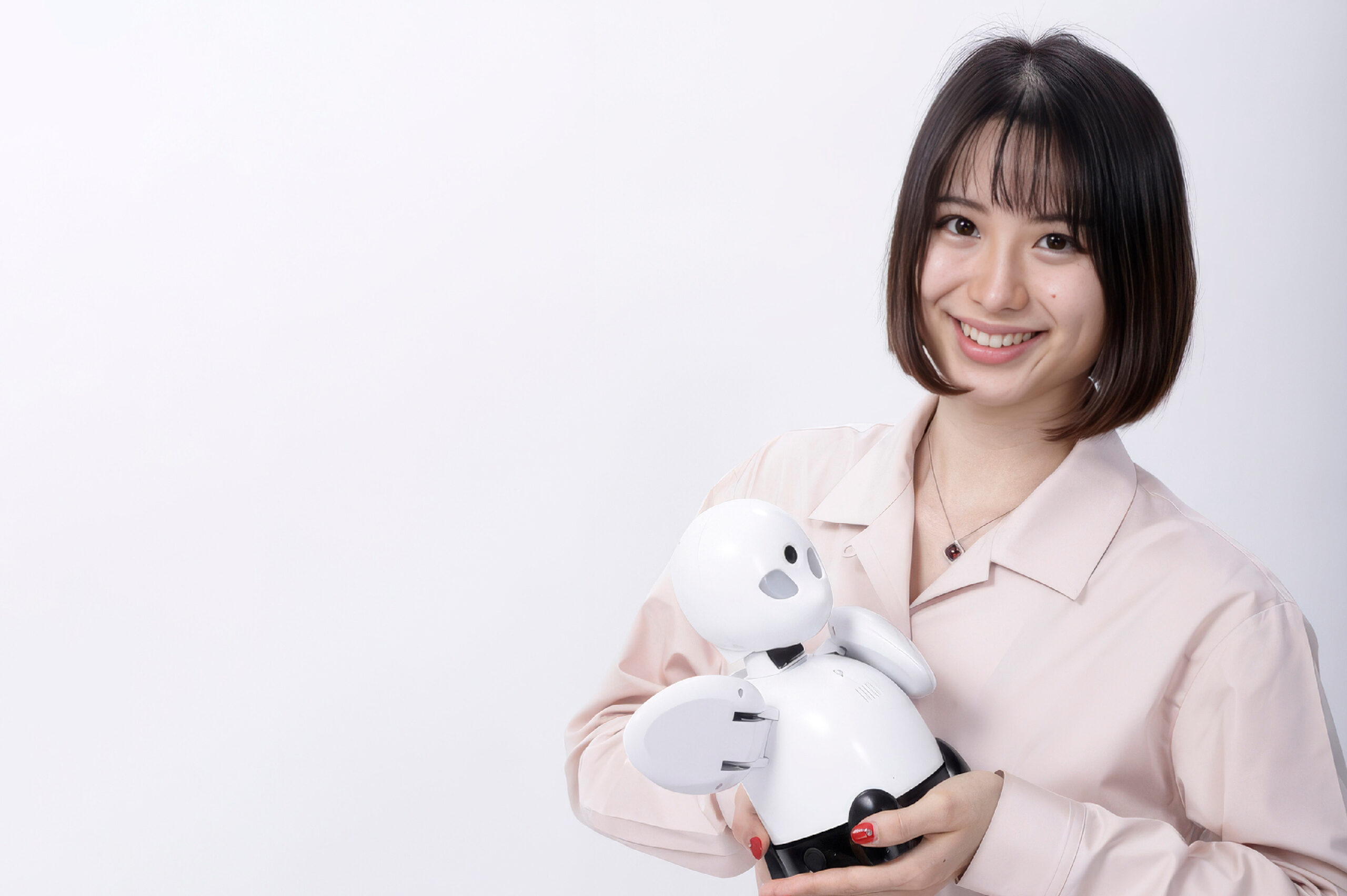
Given their shared background, Yoshifuji and Yuki began to work together with their collective experience of lengthy hospital stays front of mind. Convinced that their interests in engineering and robotics could be used to address the social isolation they had both experienced, the pair hit on the idea to launch a robot project together: OriHime.
They first thought to offer the OriHime as a rentable device to others enduring lengthy, isolating stays in hospital. They completed their first prototype in 2009, further refining it until arriving at their current model in 2013. By 2016, they began mass-producing their robots, making them available through a monthly rental business model. Their goal was to make their robots as widely available as possible, with the clear objective of “solving human loneliness through communication technology”.
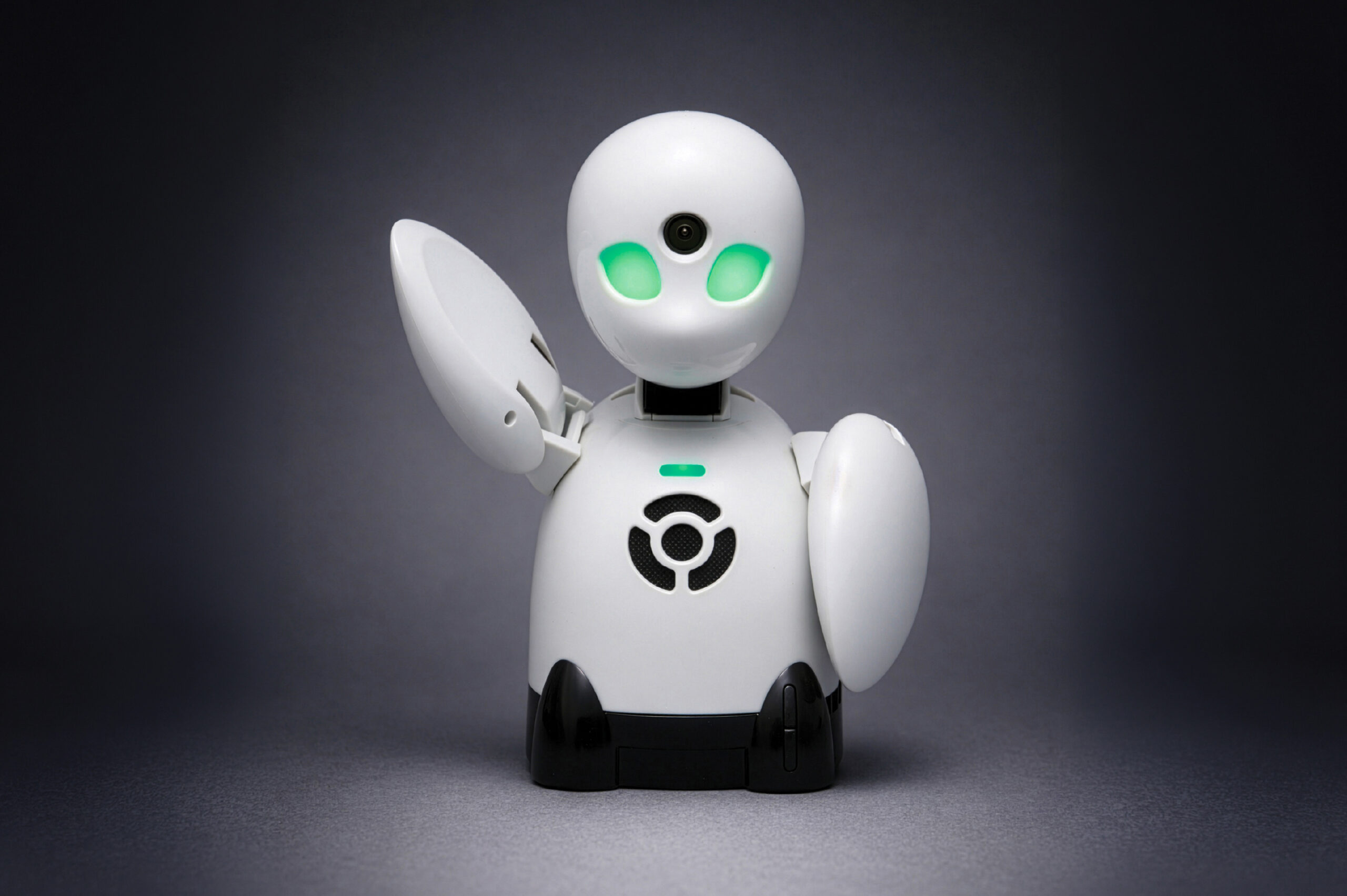
Yuki describes the initial feedback from hospital patients using the OriHime as “beyond our expectation”. They loaned the OriHime to a child who was hospitalised for several months and had to stay in a sterile cleanroom, meaning his family was not allowed to visit him. They placed an OriHime in the child’s home, and he was able to pilot it from the hospital throughout the day – watching TV with his family, greeting his father when he arrived back from work in the evening, and chatting with his sisters.
For this child, Yuki explained, “what is most amazing for him is to share the experience and share time with his family.” As the first feedback from the first OriHime user – or “pilot”, as they are called – the team was convinced they were onto something that could genuinely solve loneliness and isolation.
The robot is placed wherever makes most sense for the pilot – at home, at school, or elsewhere – and the pilot controls the OriHime via the internet. It stands 23 cm tall, 17 cm wide, and weighs 660 g. It includes a built-in camera, microphone, and speaker. The pilot can control where it is looking, hear what is happening, and contribute to conversations, just as the young hospital patient did in their first trial.
As the OryLab team began producing and renting more robots, they discovered new use cases for the OriHime. One significant influence on the direction of the company was Yuta Banda. At the age of four, Banda suffered an injury to his cervical spine, paralysing him from the neck down. He connected with the OryLab team and asked if they could work together, wanting to use his two decades of experience as a bedridden person to contribute to their project. Banda soon joined OryLab as their secretary, using his chin to pilot an OriHime for his work. This was his first real employment opportunity, and it gave him purpose. He thrived in the role, providing real-time user feedback that helped shape product development – all from his home in Morioka, some 550 km from Tokyo.
As Banda progressed in his role, he wanted to do more. He dreamed of being able to guide visitors from reception to a meeting room or make coffee for guests – but to do that, the OriHime would need a new body.
At the same time, Yuki tells of the team’s encounter with the family of a child with a physical disability. OryLab shared Banda’s story to give them hope, but the parents pointed out that being a secretary requires a certain skill level that young people, or those who have never had work experience, haven’t yet attained. The team began thinking about roles suitable for people as young as teenagers. As they mulled this over, they realised a café is a natural starting point – many people have cut their teeth in the world of work via the food service industry. The diminutive OriHime fit well on a desk or coffee table, but it wasn’t cut out for delivering hot beverages to customers. Yuki, Yoshifuji, and the team got to work on how the OriHime could evolve from something portable to something mobile.
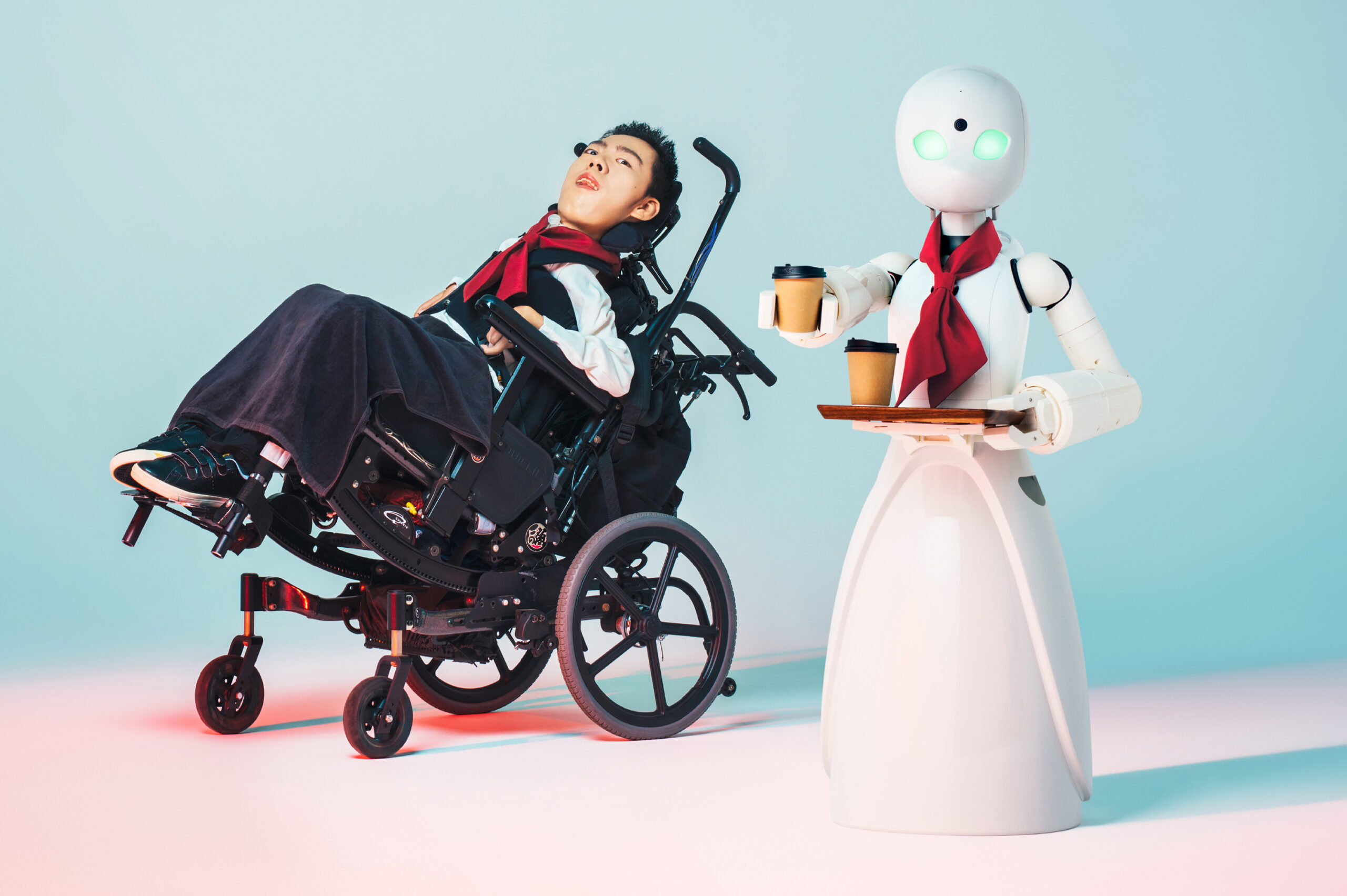
The result was the OriHime-D: a 120 cm avatar robot equipped with a camera, microphone, and speakers, but now capable of moving on wheels, enabling pilots to navigate spaces in ways many could not in their physical bodies. The torso includes 14 motors, allowing pilots to carry simple objects and interact with the environment. In parallel, the team needed a place for the robots to work – and the Dawn Café in Tokyo was born.
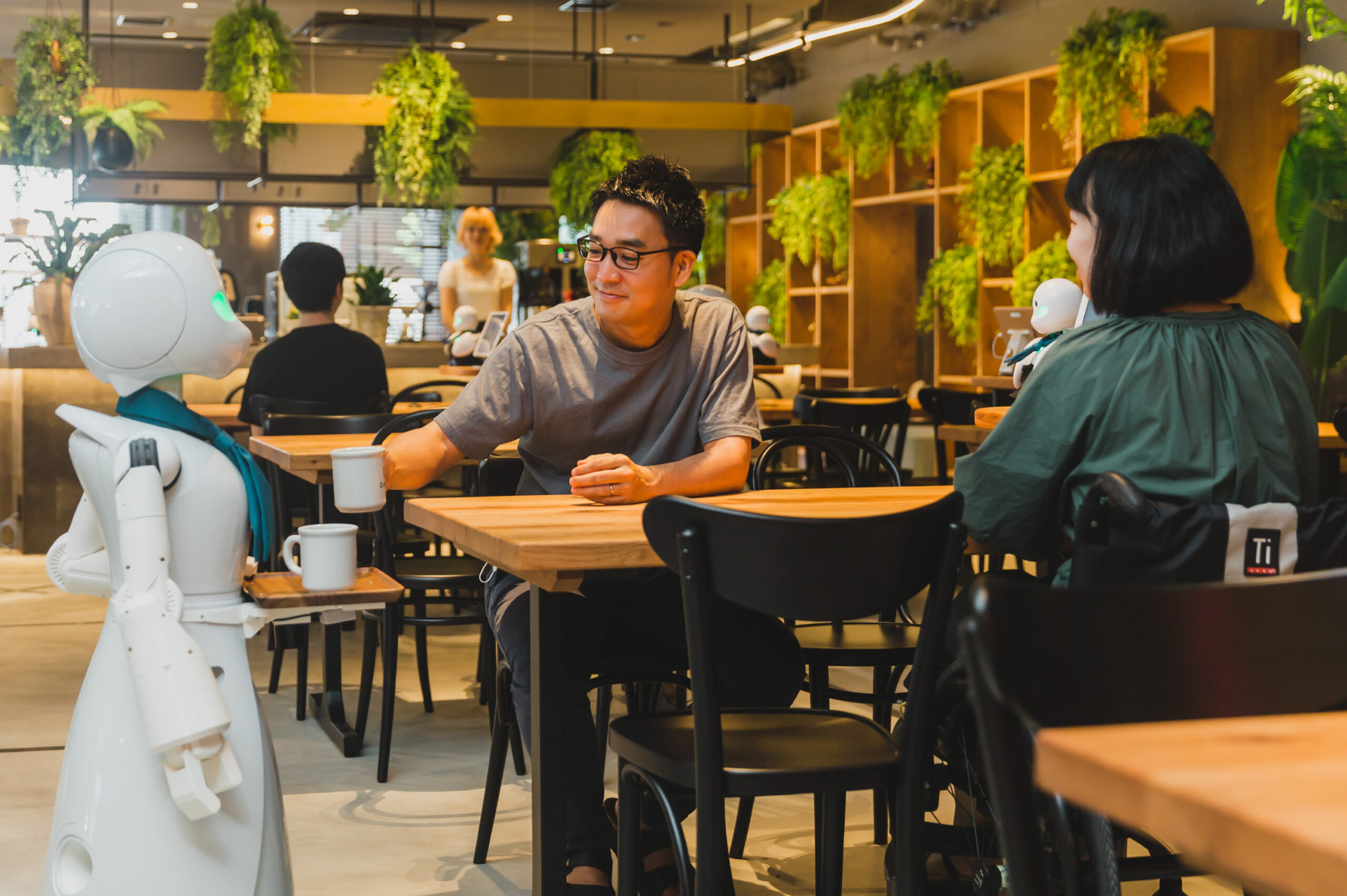
The Dawn Avatar Robot Café follows the familiar hospitality model – someone else handles the service, leaving diners to relax – with one marked difference: the service is handled entirely by robots piloted by remote staff.
Tragically, Banda passed away before the Dawn Café opened its doors in June 2021. His voice, however, played a major role in raising awareness of the café and encouraging prospective pilots to apply. Well known from TV appearances and with a sizeable social media presence, Banda had used those channels to promote the work he and OryLab were doing. As a result, when applications for pilot positions opened, OryLab was inundated with applications from people with disabilities – many of whom cited Banda’s story as their motivation.
The café today has 76 pilots with a range of disabilities serving customers from around the world. Online reviews are overwhelmingly positive. One customer from the UK commented on TripAdvisor: “It was clear that our robot’s operator loved her job and felt a sense of purpose. She was also very chatty and my friend and I both enjoyed talking to her… The food was very nice and the service was good.” Another reviewer wrote: “What really makes a difference is the person who drives them… In the end, the restaurant conquers not only the futuristic idea but the human hospitality behind the machines.”
The impact goes both ways. Masato Nagahiro – known as “Masa” – one of the pilots, explains the mindset shift he has experienced since starting work at the café: “Even if you are bedridden or handicapped, it doesn’t really matter. I have started to think like this now. I want to see how far a bedridden person can go, what kind of different things we can do going forward.” Masa lives in Tokyo and is bedridden due to spinal muscular atrophy, operating his computer with small movements of his fingers and chin. His message to others in a similar position is clear: “Even if you are bedridden, you can work. You can be a helpful part of society.”
Given the success of the Tokyo café, OryLab is expanding both within Japan and abroad. They opened the Bunshin Robot Café at Øens Madhus in Aarhus, Denmark, completing a six-month trial that concluded in September 2025. “Bunshin” means “splitting oneself” in Japanese – an apt description for avatars that enable people to be present in a café who, for various reasons, could not physically be there otherwise.
13 Danish pilots were hired for the trial, with 10 Japanese pilots also assigned for support. In this case, the Danish pilots had a range of mental health challenges resulting in social anxiety, with Yuki describing the experience as a form of “rehabilitation” to help those pilots begin to overcome their anxiety. After the trial, all 13 pilots went on to find employment elsewhere – the Bunshin café serving as an important stepping stone in their journeys.
The café in Aarhus used the same technology but for a slightly different purpose. As the project brief noted, the goal was “to test welfare technology in practice, with the aim of eventually making a difference in places like nursing homes or supported living facilities.”
Denmark is far from alone in facing the challenges of an ageing population. By 2050, one third of Japan’s population is expected to be 65 and older. In the UK, then Prime Minister Theresa May established the Minister of Loneliness in 2018 to tackle an issue that disproportionately affects older people. In Westminster alone, one third of residents aged 65 and older live alone, and one fifth of those aged 55 and older report feeling lonely. These shifting demographics and the resulting loneliness present a profound opportunity for rebuilding community and connection.
When we spoke with Yuki at the end of 2025, around 1,000 OriHimes were in use – ranging from units deployed at the Dawn Café, to private rentals for hospital patients, to corporate deployments supporting disabled employees, reflecting Japanese requirements for organisations to employ a certain percentage of people with disabilities.
When Yuki describes how the OriHime supports connection compared to a conventional video call – like the Zoom call we had when we spoke – her eyes light up. “[Video calls] are good for transacting information. People who use Zoom want smooth communication, but people who use the OriHime want the experience as if he or she were there in the OriHime. They want the time or experience of being together. The user’s objective is different.”
Yuki is also clear about what challenges remain to be solved: “To fulfil our mission to solve isolation, we need to overcome physical distance, but at the same time, we need to make a place where people are needed. When we divide isolation into two aspects, one is physical isolation – I can’t go somewhere, I can’t meet someone. The other is mental isolation – there are many people around me, but I do not feel comfortable. I don’t feel I’m needed here. To solve the problem of isolation, we need to solve both problems.” Their plans for the future are to continue approaching this multifaceted problem from multiple angles.
In this sense it is important to remember that the cafés were never the end goal. Yoshifuji and Yuki did not set out to build a chain of robot-staffed cafés: they set out to solve human loneliness. The cafés are simply a vehicle to make that vision a reality.
And just as the Bunshin café in Aarhus was a stepping stone to employment for its 13 Danish pilots, so too have Dawn Café pilots moved on to new opportunities. One pilot was hired as a salesperson at a cheesecake shop in the Osaka prefecture – with sales doubling upon their arrival. Others have been hired by NTT, a global telecoms giant, as receptionists who use the OriHime-D to guide guests to conference rooms and break the ice along the way.
Ultimately, the Dawn Café is not about robots replacing people but about redefining presence and purpose. By using technology to create places where people are genuinely needed – and the means to foster community and connection – OryLab proves that innovation can address both physical and mental isolation. In a world quick to frame technology as a problem, OryLab offers a quietly powerful reminder that technology is very much capable of being part of the solution.
At Aéto, we are drawn to organisations like Orylab precisely because they remind us of what it looks like to start from a deeply human problem and work outwards, rather than starting with a solution and working backwards. It is the same principle that guides how we approach our clients on every assignment, so we immensely value the work that Aki and the team at Orylab continue to do to challenge the status quo.