
Date
Brand authenticity is not a marketing exercise; it is an existential one. The automotive industry more than almost any other lays bare what happens when organisations know exactly who they are – and what happens when they don’t.
There is a widely shared perception among consumers and industry experts that car designs are becoming progressively more homogenised. Has machine learning and AI infiltrated the auto designers’ toolkit to the extent that competing models across manufacturers struggle to preserve a strong sense of brand individuality – and confuse customers because they increasingly all look pretty much the same?
Carmakers would argue that other industry forces are at play, and here again it’s easy to draw parallels with the demands consistently pressuring the corporate real estate, architecture, and interior design professionals’ work.
For the car designer, aerodynamic efficiency alongside the push for better fuel economy or increased EV range are common essentials across all makers’ vehicles. The laws of physics dictate a limited number of “most aerodynamic” shapes, and so key features start to consistently emerge. It is the same with safety requirements and the “SUVification” trend, where consumers overwhelmingly prefer upright SUV forms and crossovers, leading manufacturers to focus heavily on these taller, boxier silhouettes.
In 2011, SUVs made up 13.2% of the market across 27 European countries, according to the automotive research company Dataforce GmbH. By 2025, their market share had grown to 59%.
This trend has led to what critics call “carspreading”, where cars are becoming longer, wider, and heavier. Consumers like what are then seen as practical, safe, and stylish additions to support their lifestyle. But some cities are determined to clamp down on them: Paris, France, and Cardiff in the UK are front runners in implementing additional charges to bring bigger cars into their cities.
In the summer of 2010, Geely, a Chinese automotive conglomerate headquartered in Hangzhou, acquired Volvo Cars from the Ford Motor Company. Geely owns and manages a number of car-related brands and businesses, from mainstream cars to electric vehicles and mobility ventures, including other recognised brands like Smart and Lotus. Volvo Cars focuses solely on consumer passenger cars and SUVs, while it’s worth noting Volvo Group is a wholly separate publicly traded company that makes commercial heavy trucks, buses, construction equipment, marine engines, and so on, and remains entirely independent.
Despite the new ownership, Volvo Cars continues to operate largely independently: its headquarters, product development, and design remain in Gothenburg, Sweden, and the Volvo Cars brand identity, design philosophy, and Swedish heritage remain integral to the brand’s stature.
Under Geely, Volvo Cars has invested heavily in new platforms and technologies, including new engine lines and architectures, while refocusing its product line-up and relaunching its hero models. Industry observers and insiders largely view the acquisition as successful, and Geely’s backing certainly seems to have helped revive Volvo’s global sales, expand its manufacturing footprint, and support its transition toward electrification and new global markets.
As pressure mounts globally to cut emissions, and with many key cities creating ultra-low emission zones, established carmakers are having to carve out clear EV propositions. Some expanded their range; some simply transitioned to electrify their existing models. A few, like Volvo, created new brands.
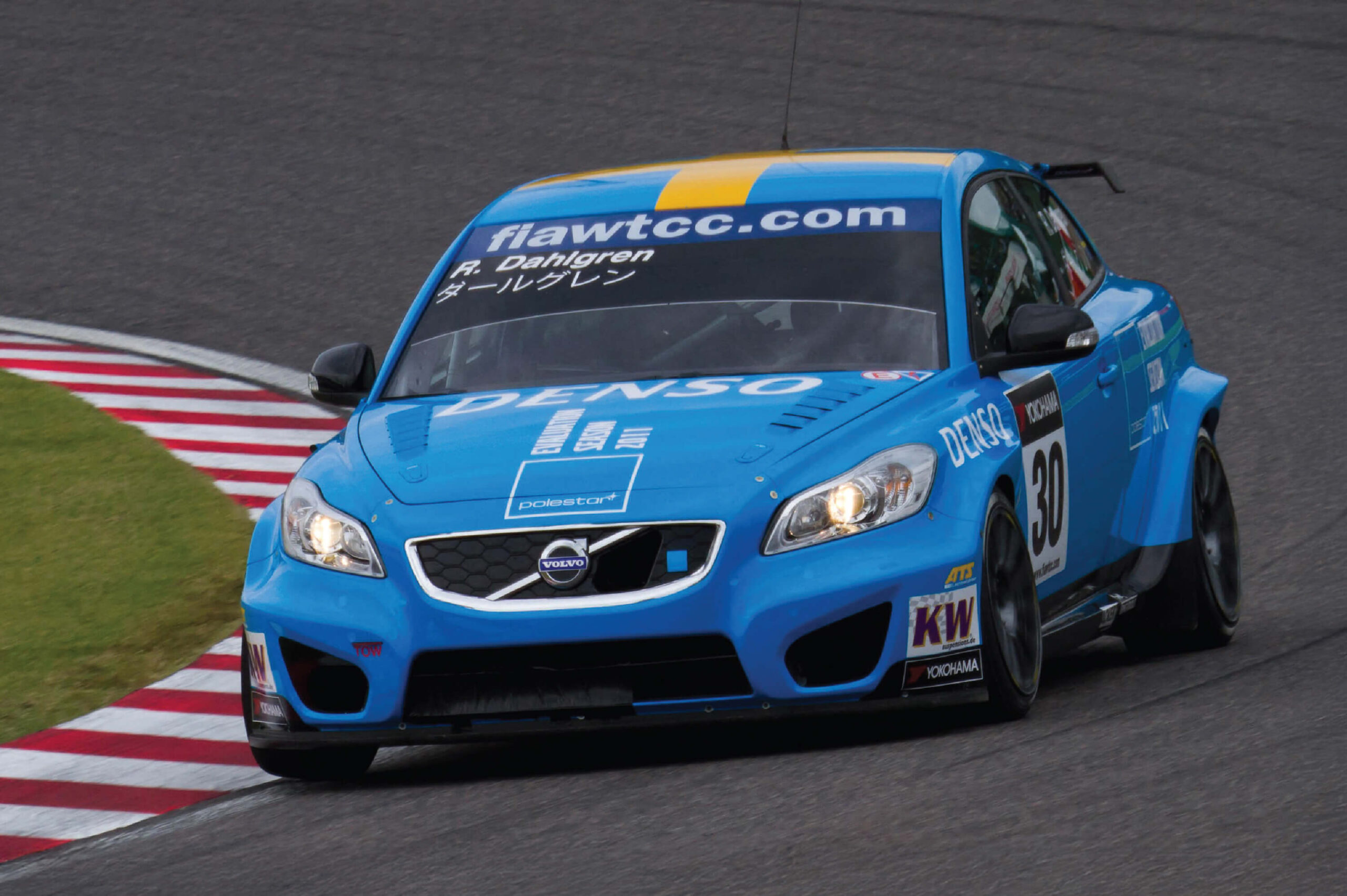
Polestar began in 1996 as a Swedish touring car racing team called Flash Engineering, founded by driver Jan “Flash” Nilsson to compete in the Swedish/Scandinavian Touring Car Championship he’d just established. The team ran highly modified Volvo cars and built its reputation on motorsport success, closely tied to Volvo from the start. In 2005, Flash Engineering was sold to Christian Dahl and rebranded as Polestar Racing, continuing to run Volvo-based touring cars. Alongside racing, the group set up a performance arm (later Polestar Performance) that tuned Volvo road cars, focusing on power, chassis, and software upgrades.
By the late 2000s and early 2010s, Polestar functioned as Volvo’s official performance and tuning partner, creating upgraded “Polestar” versions of standard Volvos and performance software packages. In 2015, Volvo/Geely acquired the Polestar brand and road-car business outright; the racing operation continued separately as Cyan Racing, and Polestar began its journey toward being a new standalone EV manufacturer. But why didn’t Volvo simply absorb Polestar to work in-house and under one badge? If Volvo had added more “Polestar-edition” sub-branded variants under the Volvo badge, it would certainly have been more efficient from a sales, logistics, dealer, and sales-team perspective. The answer is simple: Volvo Cars and Polestar brand personalities each stood for different things. For this to work, some clear distinction between the two brands was needed.
Volvo/Geely repositioned Polestar as a “separately branded electrified high-performance car company” – albeit using shared Volvo technology and scale – but with its own product, design, and commercial strategy. Polestar’s focus would be on an electric, design-driven, future-facing strategy, where performance would be expressed through advanced EV technology rather than combustion tuning. Its mission was to establish a new premium EV brand that could move faster and be more experimental than the core Volvo line-up.
Volvo’s brand story has been historically built on human safety. In 1959, Volvo’s pioneer engineer Nils Bohlin invented the modern three-point seatbelt. The design was freely shared via open patent.
Although deemed a selfless, philanthropic gesture – a gift to the entire automobile industry and humanity alike – the company also firmly cemented safety as its core promise in doing so.
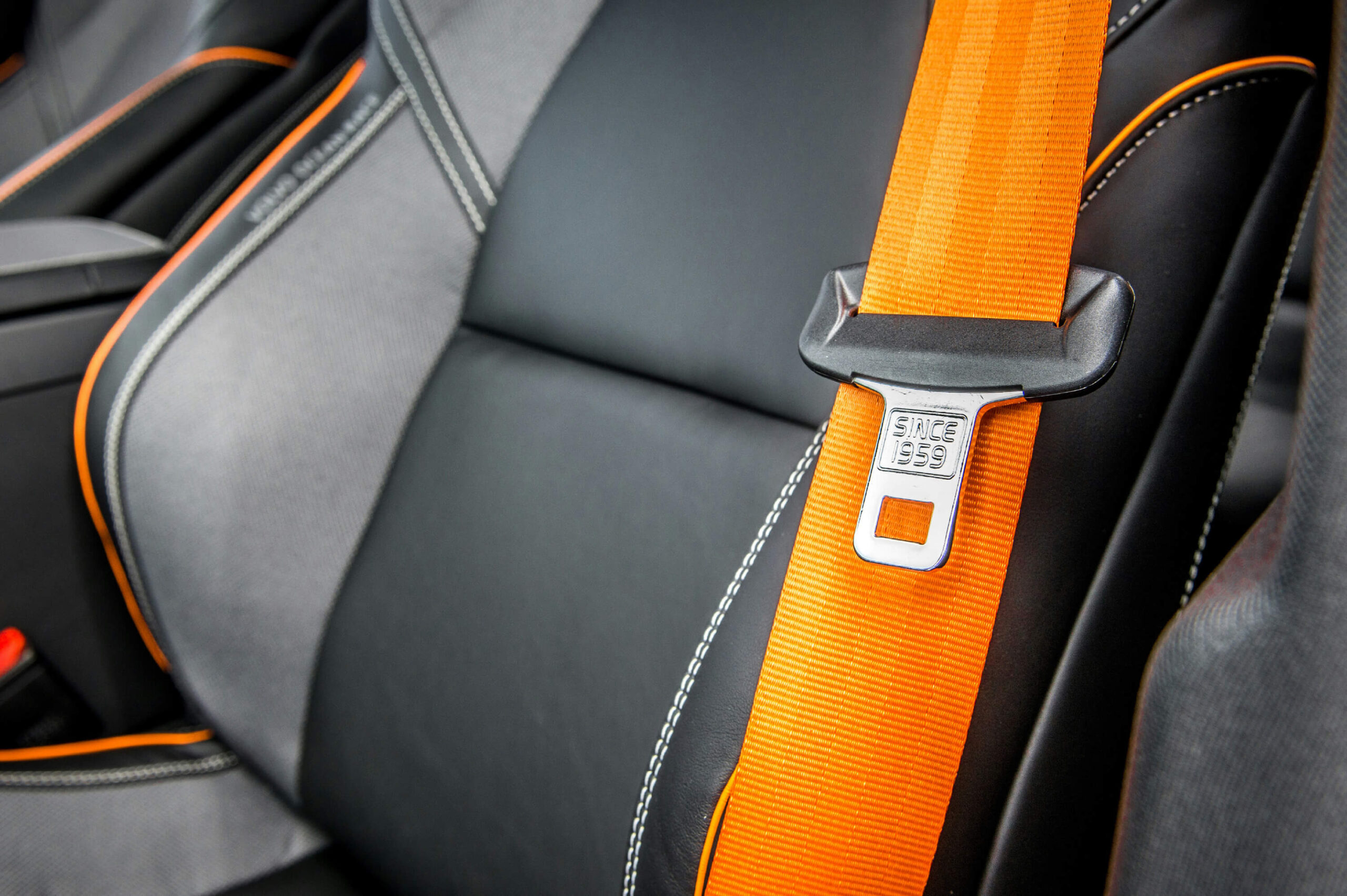
Today Volvo’s brand equity is still built on human safety. Even with evolving technology – from crumple zones to LIDAR and AI collision avoidance – safety remains Volvo’s north star. Its solid brand consistency acts as a timeless differentiator, still signalling that it stands for pragmatic luxury, family-friendly features, groundbreaking crash-safety innovation, and increasingly for responsible sustainability. These themes remain front and centre of almost every TV advertising campaign it runs. This allows the brand a methodical transition to a fully electric line-up by 2030, with its loyal client base helping Volvo win new customer segments along the way.
Conversely, Polestar’s brand story zooms in on topics like its distinct design direction, performance, speed, transparency on the origin of materials, lifecycle emissions, and energy use. Polestar leans into a more minimalist yet provocative design aesthetic, with a consumer website that feels more Apple or Dyson than just another carmaker.
These value sets were not easily or authentically aligned. By separating the Polestar product, Volvo “ring-fenced” its core equity. Polestar’s separate marque allows it to explore a performance-and-design-forward EV with bolder technology and aesthetics, without jeopardising Volvo’s core Scandinavian premium positioning around safety, family utility, and sensibility. That structural separation lets the group offer more choice in the EV space while keeping each brand’s promise sharply focused, rather than bloated by trying to be all things to all drivers. Volvo is proudly Swedish. Polestar is ubiquitously global. And the brands are different enough that those unfamiliar with the holding company connection could reasonably see them as competitors.
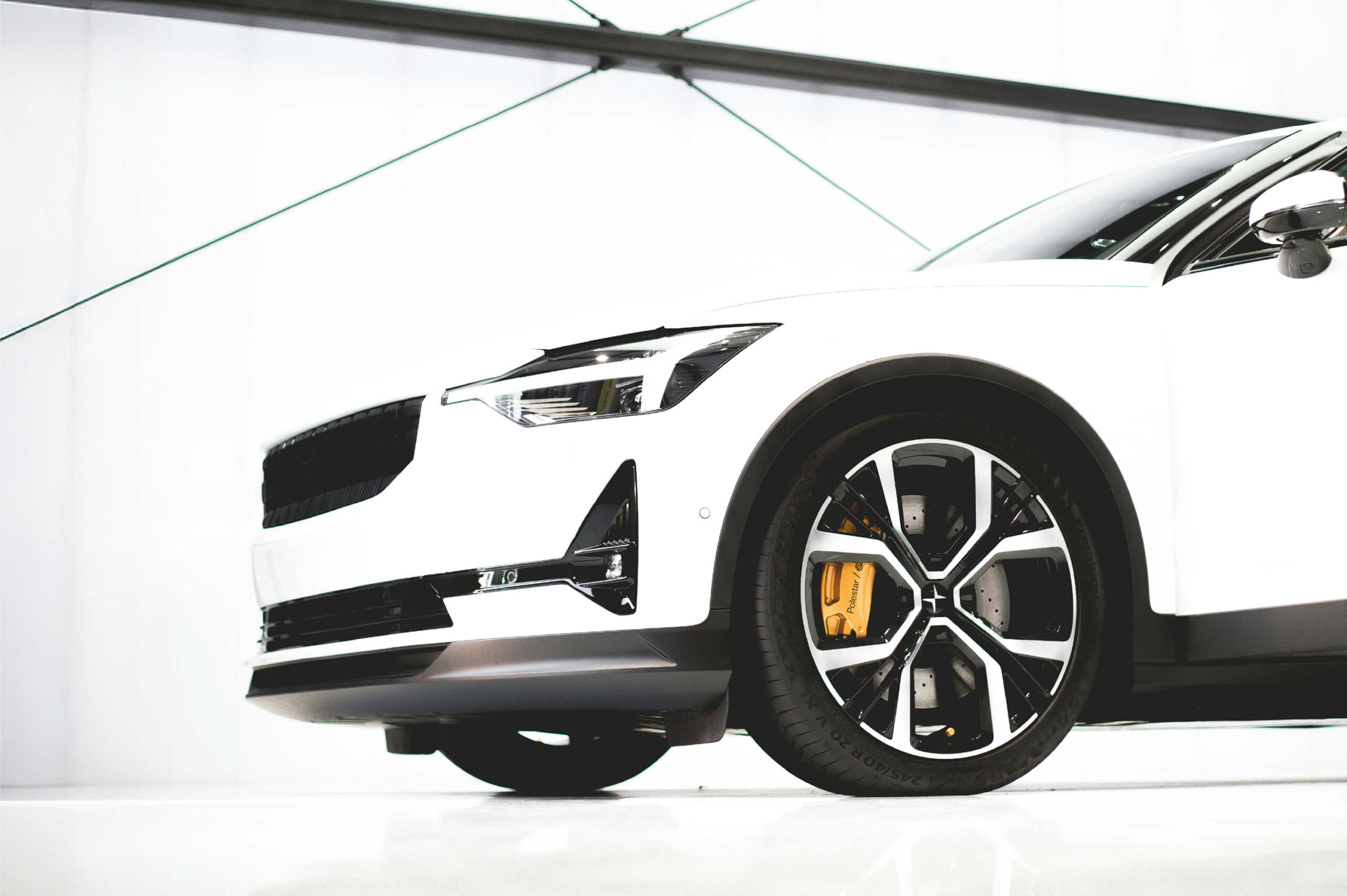
Simply put, Polestar sits in the slick but solid, seriously fast, premium EV category. In establishing its design narrative, it can more easily set about standing out among its head-to-head competition. Tesla surfaces are soft, aero-driven, and almost organic – long, curved rooflines, smooth flanks, very little ornamentation, and a nose that reads more like a consumer tech product than a traditional car. Tesla’s visual signatures are subtle: flush door handles, clean lamp graphics, a big glasshouse, and very limited brightwork, all supporting a smooth, wind-cheating silhouette.
In contrast, Polestar exteriors are more upright and geometric, with squarer shoulders, a higher SUV-like stance, and an almost monolithic volume that feels hewn rather than melted. Polestar uses more deliberate graphic markers: the rectangular grille form, vertical rear light blades, and occasional gold accents – such as seat belts and brake callipers – that cue performance and brand identity.
It’s when you enter each car’s cabin that the distinctions deepen. Polestar interiors follow classic Scandinavian principles: calm horizontality, clear separation of volumes, and a more conventional driver environment with a separate instrument display and central screen.
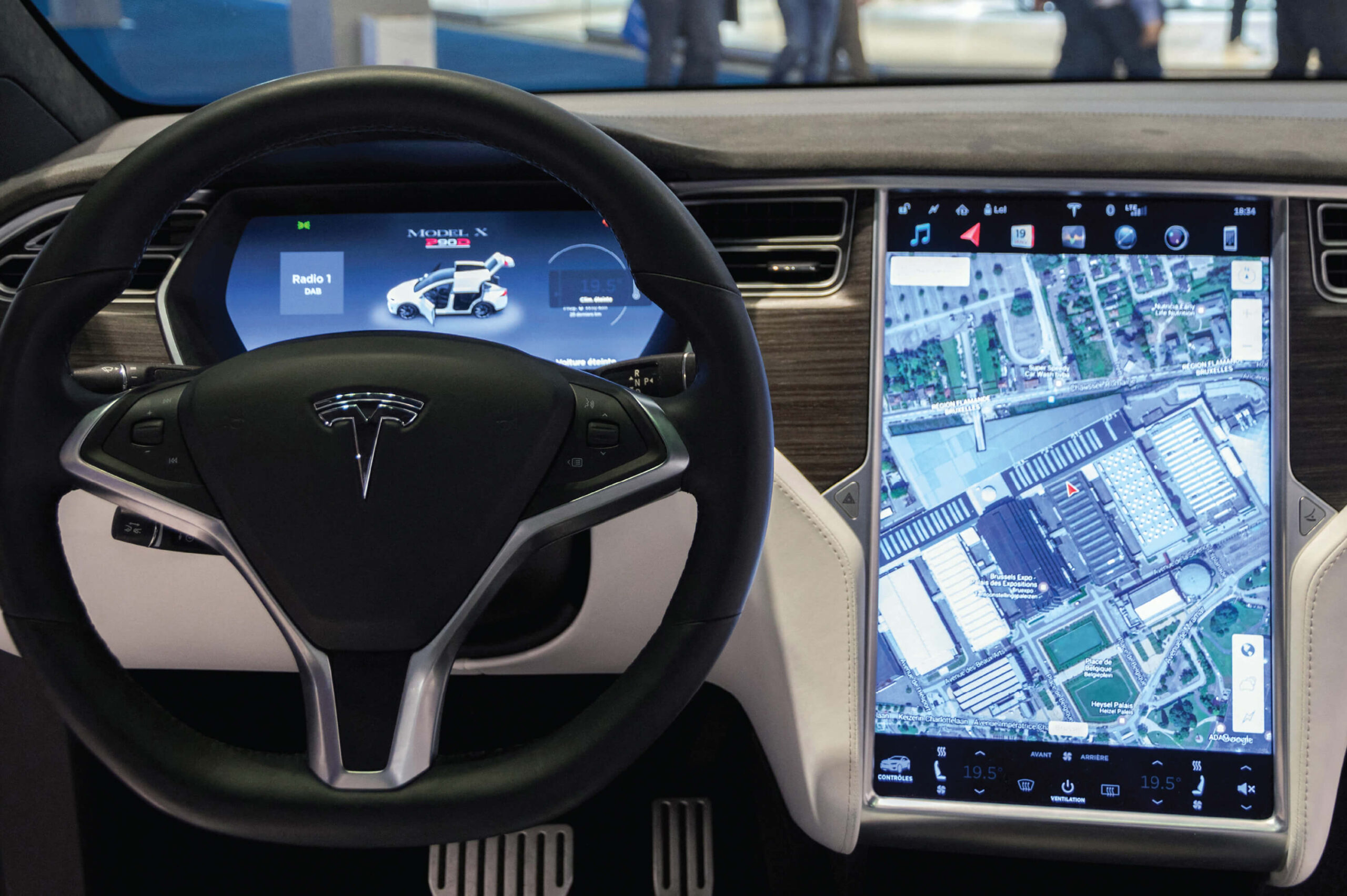
Tesla cabins are defined by radical reduction: a near-blank dashboard, one large central touchscreen handling almost all functions, minimal switchgear, and in newer models even the loss of column stalks in favour of wheel haptics. The Tesla interior reads as futurist and screen-centric, prioritising perceived space and tech spectacle – sometimes at the expense of traditional driver-oriented cues and tactile controls. Large central touchscreens concentrate controls that can require longer glances and more screen interactions than physical knobs and stalks, increasing visual, manual, and cognitive load.
Tesla’s response has been to add yet more technology. Driver monitoring – via steering-wheel torque sensors and interior cameras – is used to detect when a driver’s attention strays. The car issues escalating alerts to nudge drivers back to the road. Tesla has, in effect, created a cognitive distraction problem that it then decided to design out with additional technology. This is surely something the DNA of Volvo would never have allowed them or Polestar to fall prey to.
Tesla’s visual language reinforces a Silicon Valley narrative: global uniformity, strong family resemblance, and the sense that the car is a software platform wrapped in as little visual noise as possible – more like a connected device scaled up to car size. Polestar, by contrast, feels like a modernist object from the Nordic design world that happens to be an EV.
Volvo Cars and Polestar have each carved their own space in this market, leveraging classic brand-architecture logic: keep the parent brand tight and consistent, and create a focused offspring for the disruptive play – rather than over-stretching the main line. Together they expand the group’s portfolio without asking a single brand to carry conflicting meanings, which is often where too much choice begins to erode clarity instead of adding value.
In macro terms, when a brand has too many variants it risks overlap, loss of distinction, and loss of control over brand perception. Volkswagen recognised this and had to sharply simplify its model and variant line-up a decade ago because an overabundance of derivatives was hurting profitability, dealer clarity, and market positioning. Yet with its EV offer flowing through over the last five years, the line-up is once again confusing. The Volkswagen website now offers more than 18 vehicles with little easily understood distinction as you move up the price ladder. In comparison, Volvo has nine.
This is product sprawl that merely confuses the consumer, often resulting in decision paralysis. A tighter line-up makes it easier for customers to shop and makes a brand’s role in a category more legible. Operational gains follow: lower inventory, better margins, and simpler supply chains – all of which drive stronger brand-building behind edited portfolios, creating a loop where tighter assortments and clearer positioning reinforce each other.
In 2020, Ford repositioned its brand under CEO Jim Farley, who took over during a period of financial turmoil caused largely by losses from selling sedans into the saturated North American market. Farley course-corrected, revamping the product offer to focus on higher-margin trucks, SUVs, and hybrids, killing its sedans and creating a leaner portfolio. The move clarified Ford as “trucks, utilities, work” and “built Ford tough” rather than a full-line generalist. Record F-Series sales, a hybrid surge, and a strong cultural turnaround followed in 2025. The brand now feels focused, premium, and American-rooted – no longer diluted.
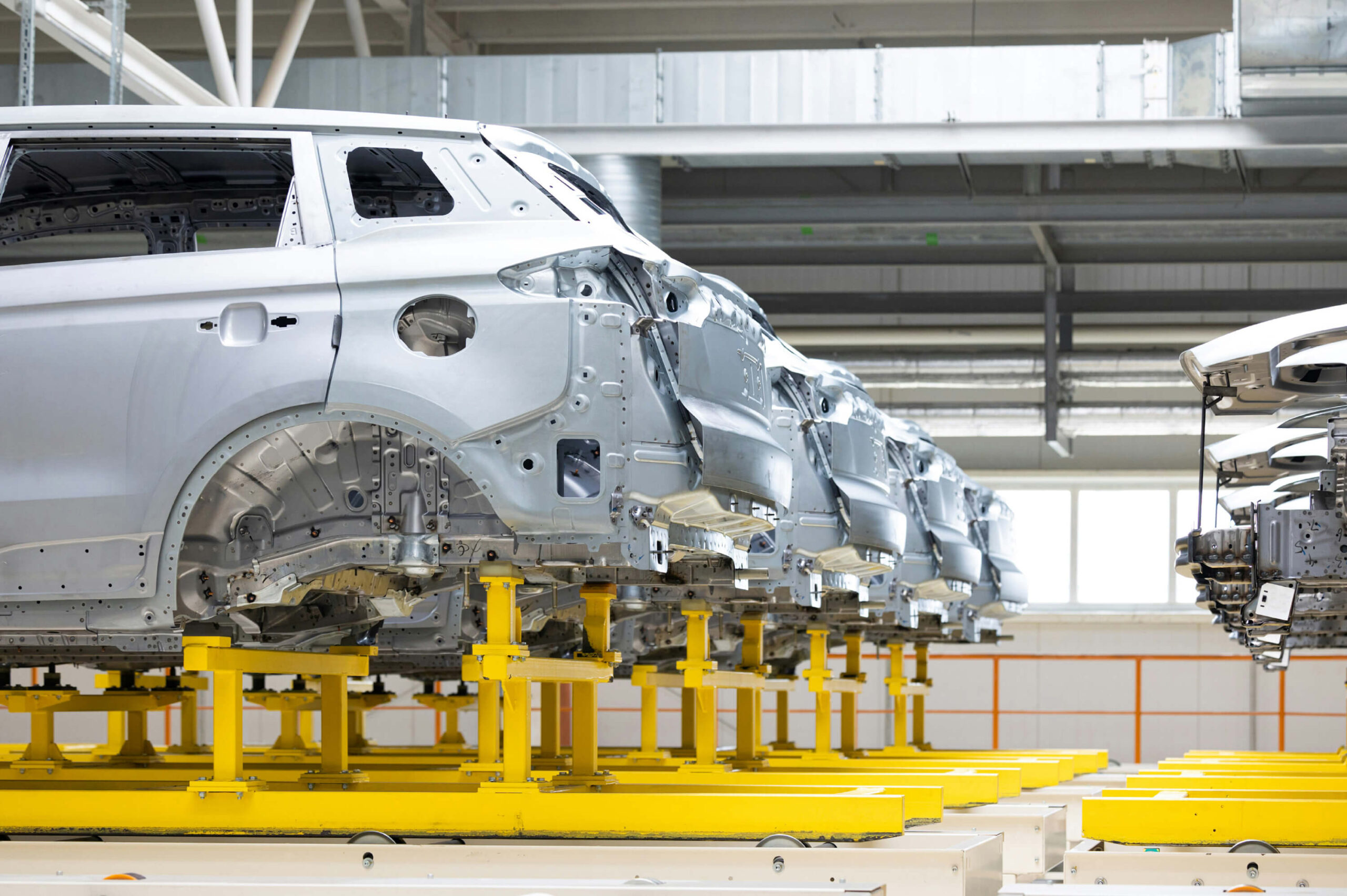
The global auto market also has new entrants arriving at pace: the relaunch of the historic British brand MG, or Chinese maker BYD (Build Your Dreams). And watch out for Vietnamese brand VinFast, which – based on expansion plans in neighbouring right-hand-drive markets across Indonesia, Malaysia, Singapore, and Thailand – will surely arrive on UK soil before long.
These new brands arrive with no heritage, however. Heritage provides a stable foundation for consumers to build emotional bonds, turning buyers into fans. As author Neil Gibbs notes in his book The Participation Revolution, fans forgive imperfections, evangelise the brand, and grant permission to innovate – provided it feels like a natural development, not a betrayal. Volvo fans, for instance, embrace its EVs because they feel like the safest choice, not just from a crash perspective but from an environmental one too, preserving if not reinforcing brand loyalty.
Consumers bond deeply with authentic stories, forgiving missteps and amplifying advocacy. Fans grant “innovation permission” when it is rooted in legacy, fuelling loyalty across disruption. But the new brands arrive without the baggage of fossil fuel manufacturing. They are, quite literally, nimbler. As more of them arrive, though, the question becomes: how do they stay clear of homogenisation?
In all cases, the pursuit of an idealised standard risks stripping away individuality. Workplaces the world over are increasingly designed from the same template, where the extravagance of the feature staircase defines successful design. Aesthetically, these spaces may be fine. But emotionally? They are as forgettable as the AI-generated face: pleasing but unremarkable. And when a workplace feels interchangeable – just like five different competitors’ mid-size luxury SUVs that ultimately all feel pretty much the same – so too can the experience of working there.
If we accept that a workplace is part of an organisation’s identity – a physical manifestation of its values and culture – then the space must carry visible, tangible signs of that identity. That doesn’t mean contrived branding exercises and slogans on walls in search of homogenised corporate perfection, but instead representing your organisation’s authentic self in a way that visually celebrates your quirks and differences – the very things that make you different from your competitors.
At Aéto, we believe that the organisations who invest the time to genuinely know themselves – their story, their values, their contradictions – are the ones whose workplaces, like Volvo’s safety record or Polestar’s design approach, deliver an experience that is truly one of a kind.